


“Blockchain” stopped being just a buzzword once decentralized applications, or dApps, started handling real money and real users. A dApp keeps its state and logic on a distributed ledger instead of a company-owned server, and executes that logic through smart contracts rather than a backend API. Today dApps run digital wallets, DeFi protocols, games, identity tools and increasingly dApp development projects for regulated fintech products.
The blockchain you build on decides most of what happens next: how fast transactions confirm, how much users pay in fees, which programming language your team needs, and how easy it is to find developers later. This guide walks through what actually matters when picking a chain for a dApp, compares the platforms teams choose most often in 2026, and flags the trade-offs each one still carries.
What a dApp Actually Needs From Its Blockchain
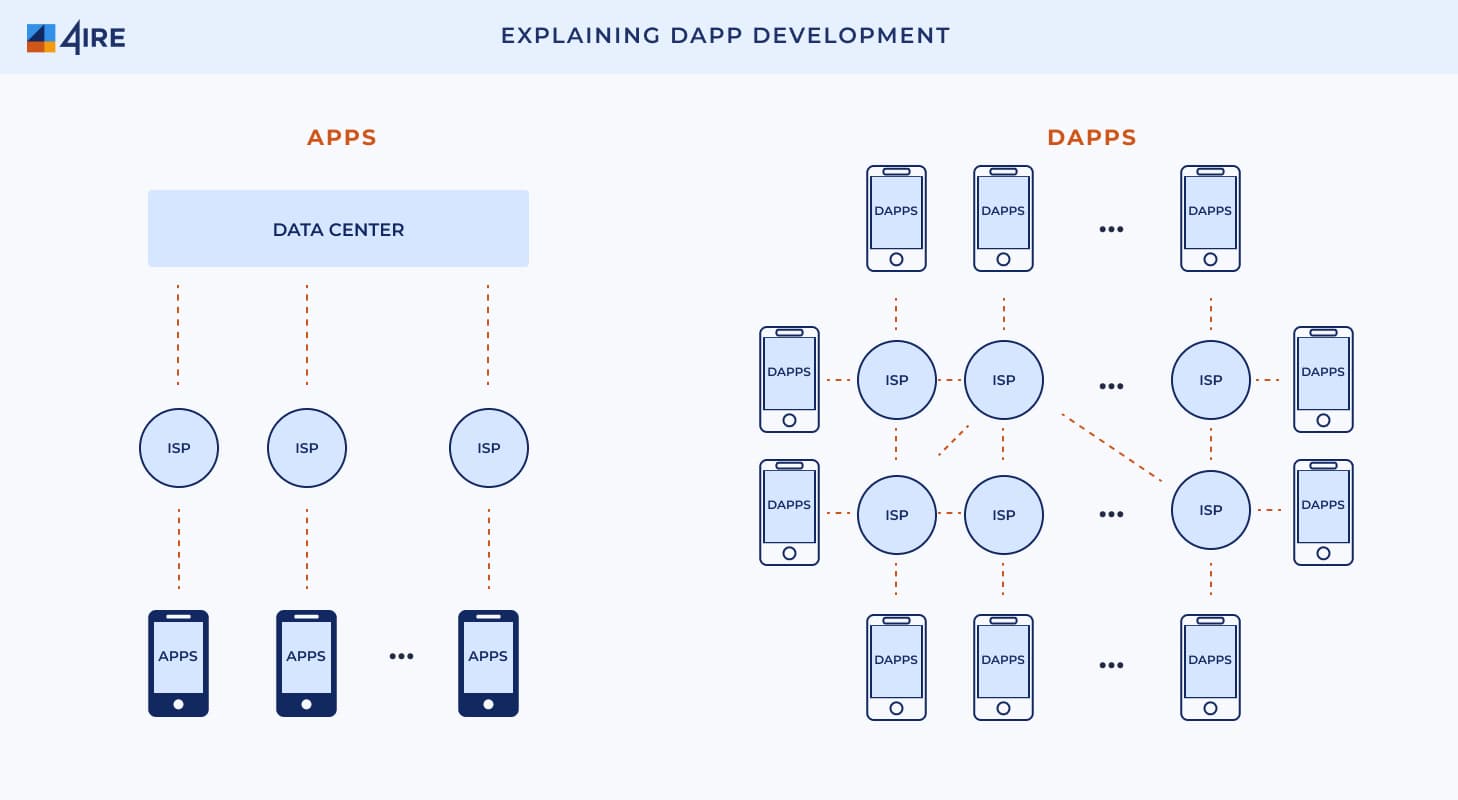
A dApp is not just a website with a wallet button attached. Compared with a traditional app, it depends on its underlying chain for things a normal backend takes for granted:
- Open-source, verifiable code that users and auditors can inspect directly
- No single operator: changes go through the network's governance or consensus, not one company
- State stored redundantly across nodes rather than in one database
- Smart contracts that execute the application's core logic on-chain
- A native or supported token model for fees, incentives or governance, where relevant
Because that logic is hard to change once it is live, an audited, battle-tested chain and contract codebase is not optional for anything that touches user funds. Most exploits trace back to a contract bug that shipped without a proper review (see our guide to smart contract audits for what that process should cover).
Why the Underlying Chain Changes the Product
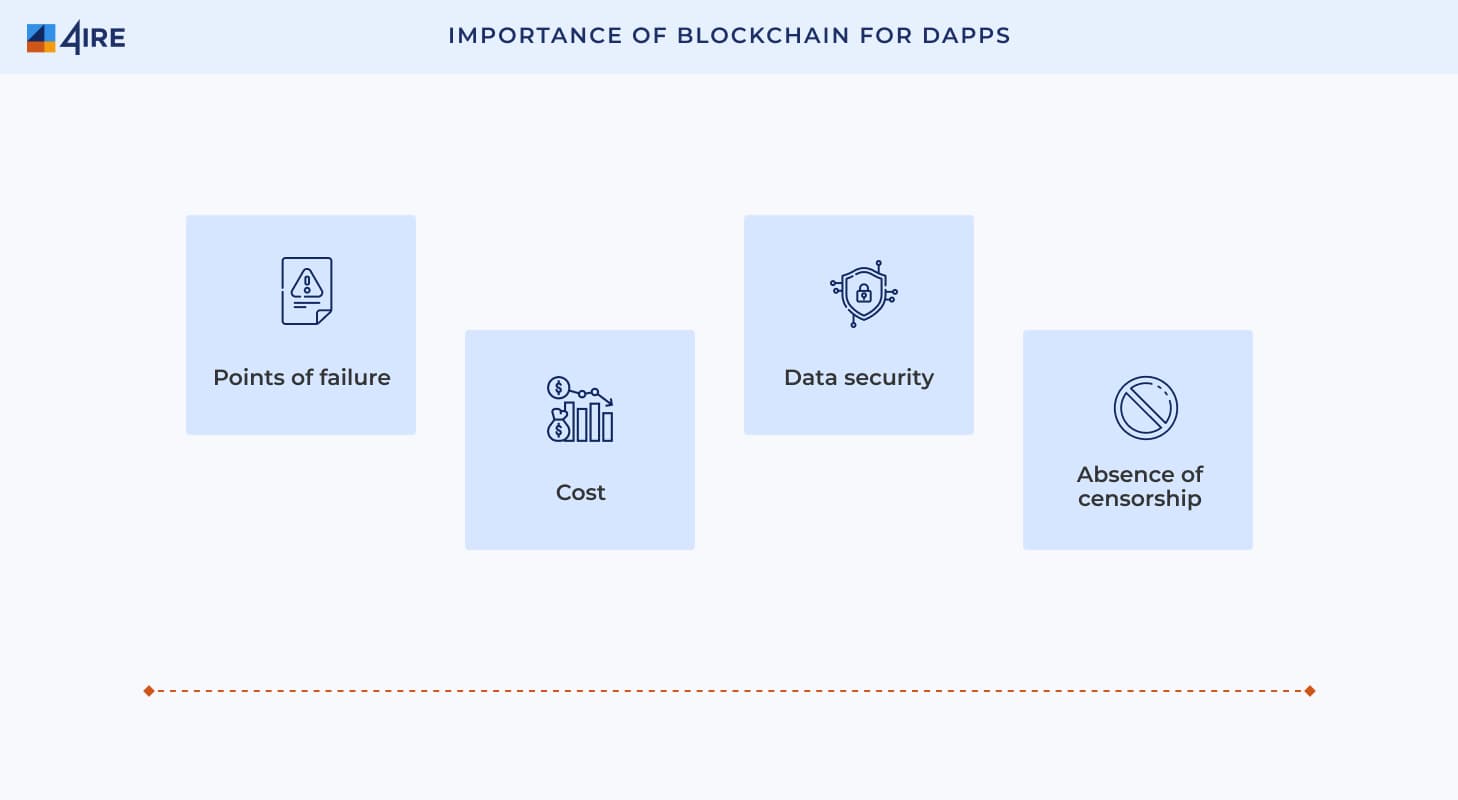
The blockchain layer is not interchangeable plumbing. It sets the ceiling on what your dApp can realistically do:
- No single point of failure: losing one node, or even a region, doesn't take the app offline
- Lower long-term infrastructure cost once the network is live, since there's no central server fleet to run
- Data integrity users can verify themselves, instead of trusting your backend logs
- Censorship resistance, within the limits of your own jurisdiction's regulation
Public Blockchains Worth Considering in 2026
There are dozens of general-purpose chains; most teams end up choosing between a handful. Here is how the platforms founders ask 4IRE about most often compare.
Ethereum and Its Layer-2s
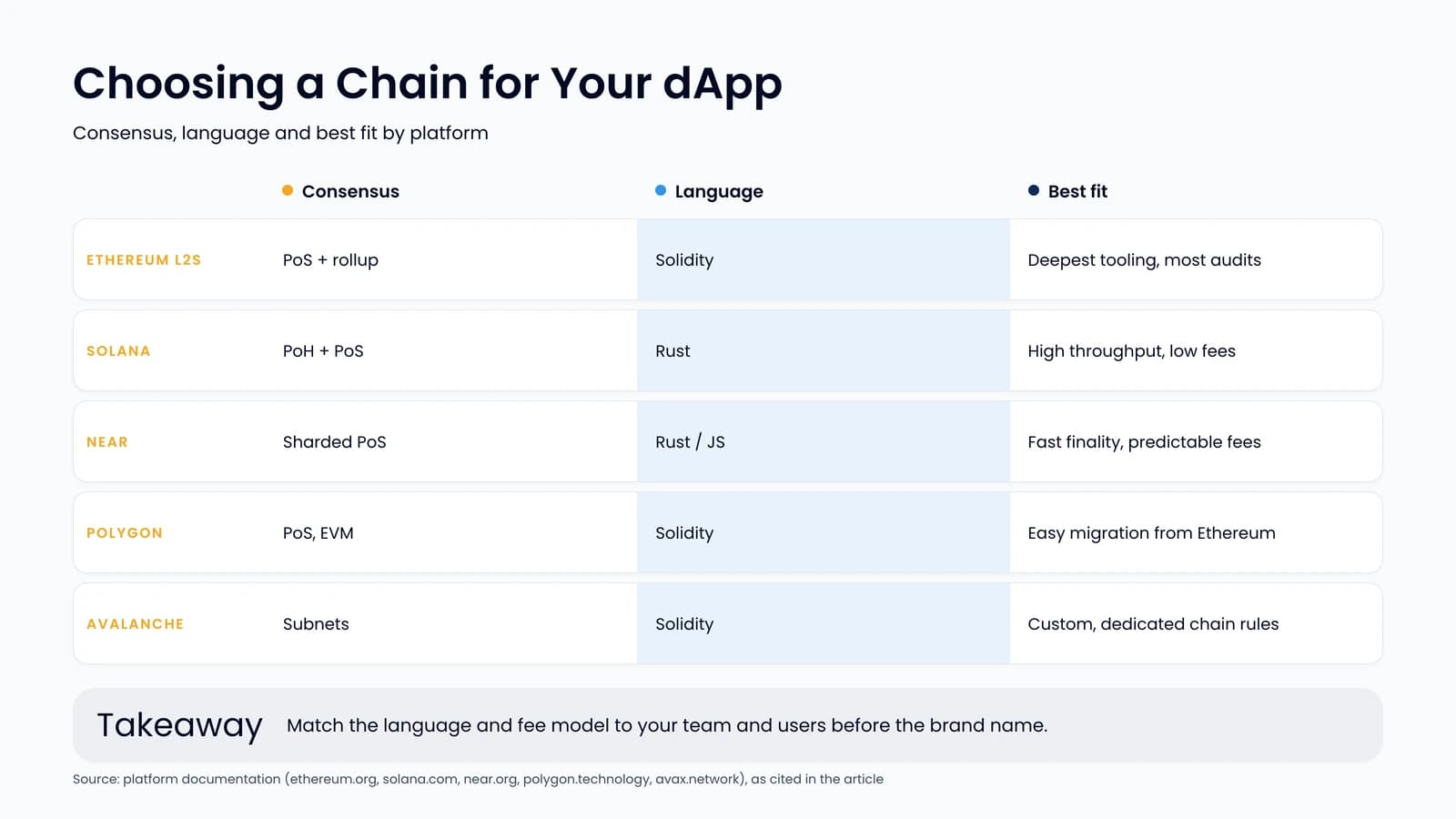
Ethereum is still the default for dApp development: the deepest developer pool, the most audited tooling, and Solidity as a widely known language. Since the 2022 Merge, Ethereum runs on proof-of-stake, and most new production dApps now deploy through a Layer-2 rollup (Arbitrum, Optimism, Base) rather than mainnet, to keep gas fees manageable. The trade-off is fragmentation: picking a rollup is now its own decision, on top of picking Ethereum.
Solana
Solana targets high throughput and sub-cent fees on a single Layer-1, combining Proof-of-History with Proof-of-Stake. It fits consumer apps, trading platforms and games that need fast, cheap execution, at the cost of coding in Rust rather than Solidity and a smaller, though fast-growing, audit community.
NEAR Protocol
NEAR is a sharded, proof-of-stake Layer-1 built for predictable fees and fast finality, with contracts written in Rust or JavaScript/AssemblyScript. 4IRE has been a partner in the NEAR network since 2020 and has shipped production dApps on the network, which makes it a practical option when a team wants an EVM alternative with an active grants program behind it.
Polygon, Avalanche and the Rest
Polygon is an Ethereum-compatible scaling network: full EVM tooling, low fees, and an easy migration path if your contracts are already in Solidity. Avalanche takes a different approach, letting a project spin up its own dedicated, EVM-compatible subnet with custom rules, which is useful when you need customization without building a Layer-1 from scratch. TRON remains popular for stablecoin transfers because of its low fees, though it is more centralized at the validator level than Ethereum or Solana. Polkadot suits projects that need a dedicated, interoperable chain (a parachain) rather than shared infrastructure, a heavier commitment that fits network-scale products more than a single app.
EVM Compatibility as a Hedge
One factor cuts across all of the above: whether the chain is EVM-compatible. Ethereum, its Layer-2s, Polygon, Avalanche and BNB Chain all run the Ethereum Virtual Machine, so Solidity contracts, wallets like MetaMask, and most auditing and monitoring tools work across them with little change. Choosing an EVM chain first and a specific network second keeps a later migration, say from one rollup to another as fees or throughput shift, a configuration change rather than a rewrite. Non-EVM chains such as Solana and NEAR can be the better technical fit, but that portability option goes away.
Matching the Chain to Your dApp's Real Requirements
Beyond brand recognition, weigh four things before committing to a platform:
- Maintainability. Bugs are expensive to fix after mainnet launch, so favor a chain and an audit process your team can actually support long-term.
- Users and reach. A chain your target audience already holds a wallet on lowers onboarding friction more than raw throughput does.
- User experience. Gas costs, confirmation times and wallet UX decide whether non-crypto-native users stick around after the first transaction.
- Total cost of ownership. Audits, ongoing infrastructure and the going rate for developers all vary a lot between chains.
Common Pitfalls to Avoid
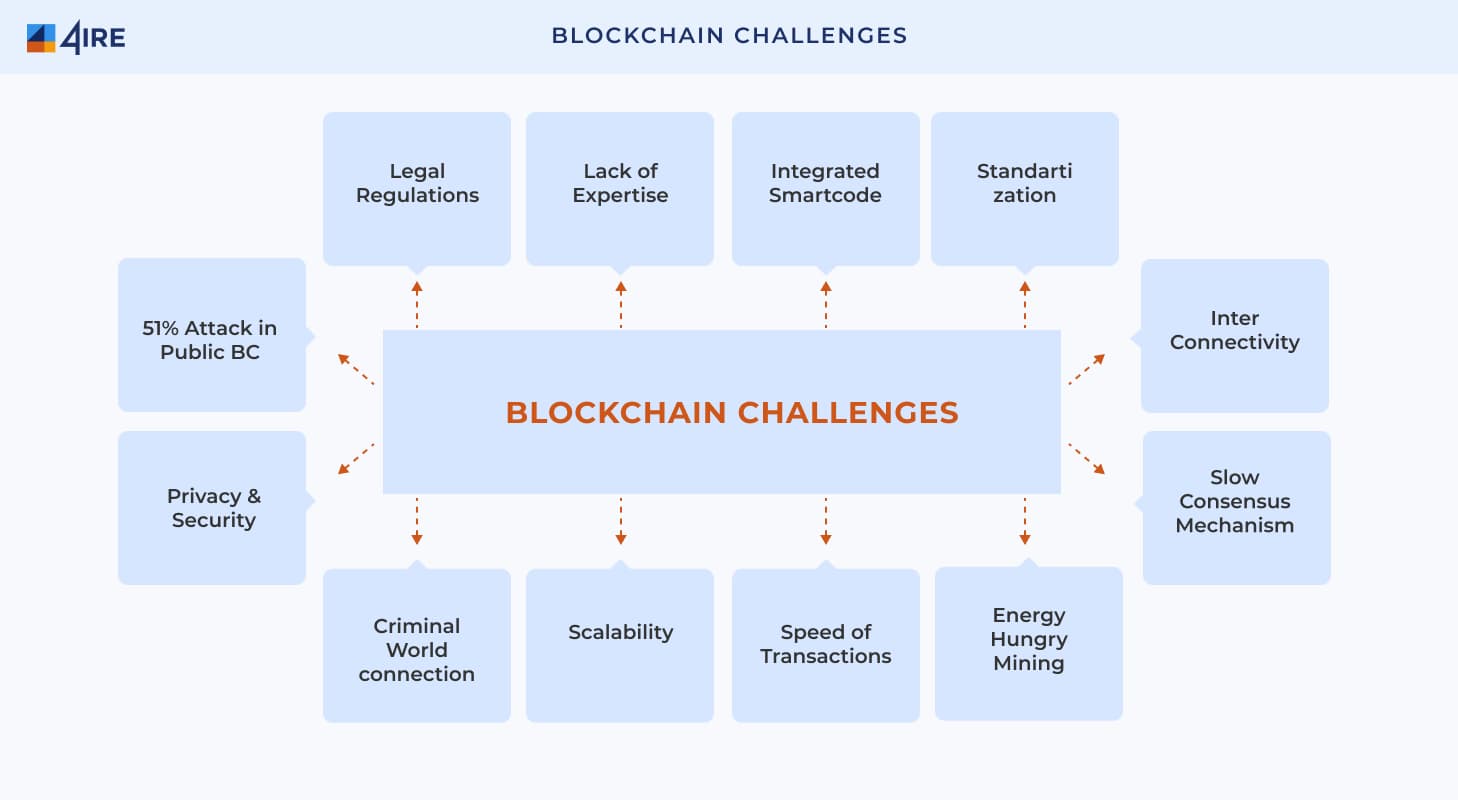
The most frequent mistake is picking a chain for its market hype rather than its fit, then discovering mid-build that the token economics, language or throughput don't match the product. A close second is skipping a proper security review because a testnet demo worked fine: testnet traffic is nothing like adversarial mainnet traffic, and a contract that passes a quick internal check can still fail against a determined attacker.
- Budgeting for one audit at the end of the project, instead of a review pass before and after major contract changes
- Assuming a chain's marketing throughput number will hold under real, contested network conditions
- Underestimating how much wallet and onboarding friction costs you in user drop-off, especially outside crypto-native audiences
- Treating the blockchain choice as permanent when an EVM-compatible chain would have kept the option open
A public chain also isn't always the right starting point. If your use case needs pre-vetted participants or regulatory-grade access control, a permissioned ledger may serve the project better than any public chain on this list; our guide to choosing a distributed ledger technology walks through that fork in the decision.
Conclusion
There is no universally “best” blockchain, only the best fit for your budget, your users and your team's skills. Weigh maintainability, reach, user experience and total cost before you write a line of Solidity or Rust, and get a security review scheduled before launch, not after an incident. The 4IRE team can help you evaluate the options against your specific requirements for dApp development and take the resulting build from prototype to a production-ready, audited release.
Learn more from us
 Blockchain news28 Sept 2026
Crypto Wallet Development Cost in 2026: A Full Breakdown
How much does crypto wallet development cost in 2026? 4IRE's estimates by tier, platform and feature, plus running costs and what drives the budget.
Olena Petrashchuk
 Blockchain news28 Sept 2026
Real World Asset Tokenization in 2026: A Practical Guide to RWA
Real world asset tokenization explained: asset classes, how the stack works, 2026 RWA market data, US, EU, Singapore and UAE rules, and how to launch.
Olena Petrashchuk
 Blockchain news28 Sept 2026
Real Estate Tokenization in 2026: A Guide to Fractional Ownership
How real estate tokenization works: SPVs, token standards, fractional ownership, current market data, Deloitte's 2035 forecast, rules and real projects.
Olena Petrashchuk
Pick the Right Chain for Your dApp
Not sure whether Ethereum, Solana, NEAR or a custom chain fits your project? Talk to 4IRE's blockchain team about your requirements before you commit to a platform.
FAQ
It's possible but costly. EVM-compatible chains (Ethereum, Polygon, Avalanche, BNB Chain) make migration easier because contracts and tooling largely carry over. Moving off a non-EVM chain like Solana or NEAR usually means rewriting contracts, which is why the choice matters most before you write code.
Almost all dApps build on an existing public chain or its Layer-2. A dedicated chain (an Avalanche subnet, a Polkadot parachain, or a permissioned ledger) only makes sense once you need custom rules, compliance controls or throughput that a shared network can't give you.
Fees move with network demand, so treat any snapshot as temporary. As a rule, Layer-2 rollups on Ethereum, plus Solana, Polygon and NEAR, all target sub-cent to a few cents per transaction; unrolled Ethereum mainnet is the expensive outlier of the group.