

 Blockchain news

Choosing a blockchain development company is less about finding the biggest name and more about finding a team that has already shipped the kind of product you want to build, under the rules you will have to follow. A partner that writes clean smart contracts but has never passed a regulator's review, or one that knows compliance but has never run a product in production on-chain, will cost you months.
This guide sets out what to check before you sign, then profiles five companies worth shortlisting in 2026. Every entry was re-checked against the company's own site in September 2026, including a dated sign that it is still actively operating.
Why the Choice Matters More in 2026
Blockchain work has moved from pilots to regulated products. In the EU, MiCA has applied in full since 30 December 2024, and the transitional period for crypto-asset service providers ended across the EU on 1 July 2026: after that date, firms serving EU clients without a MiCA licence must stop, as ESMA confirmed in its April 2026 statement. In the US, the GENIUS Act, signed in July 2025, created a federal framework for payment stablecoins.
For a buyer, that changes the brief. The most common blockchain projects now touch payments, custody, tokenized assets or stablecoin infrastructure, and each of those comes with licensing, KYC/AML and audit requirements. Your development partner has to design for them from the first sprint, not bolt them on before launch.
What to Look For in a Blockchain Development Company
- Relevant shipped products. Ask for live products or case studies in your domain, such as a wallet, exchange, tokenization platform or DeFi protocol, not a generic portfolio.
- Chain and stack fit. A team strong on EVM chains may be the wrong choice for a Rust-based chain, and the reverse. Decide on your platform first; our guide on how to choose the right blockchain walks through the trade-offs.
- Security practice. Look for internal code review, automated testing and a clear plan for an independent smart contract audit before mainnet.
- Regulatory experience. If you will hold customer funds or issue tokens, ask which regimes the team has built for and how they handled KYC/AML, reporting and custody.
- Delivery model. Fixed scope, time and materials, or a dedicated team: the model should match how settled your requirements are.
- Independent reviews and references. Read reviews on third-party platforms and speak to at least one past client with a similar project.
- Post-launch support. Blockchain products need upgrades, monitoring and incident response long after launch.
How We Built This List
We looked for companies with a public blockchain development practice, a track record across several industries, and a verifiable, current presence. For each one we checked the company's own website and a recent dated signal, such as a blog post or announcement from 2026. We only repeat claims the companies make about themselves on their own sites; we do not repeat ratings or headcounts we could not confirm.
Top 5 Blockchain Development Companies in 2026
1. 4IRE
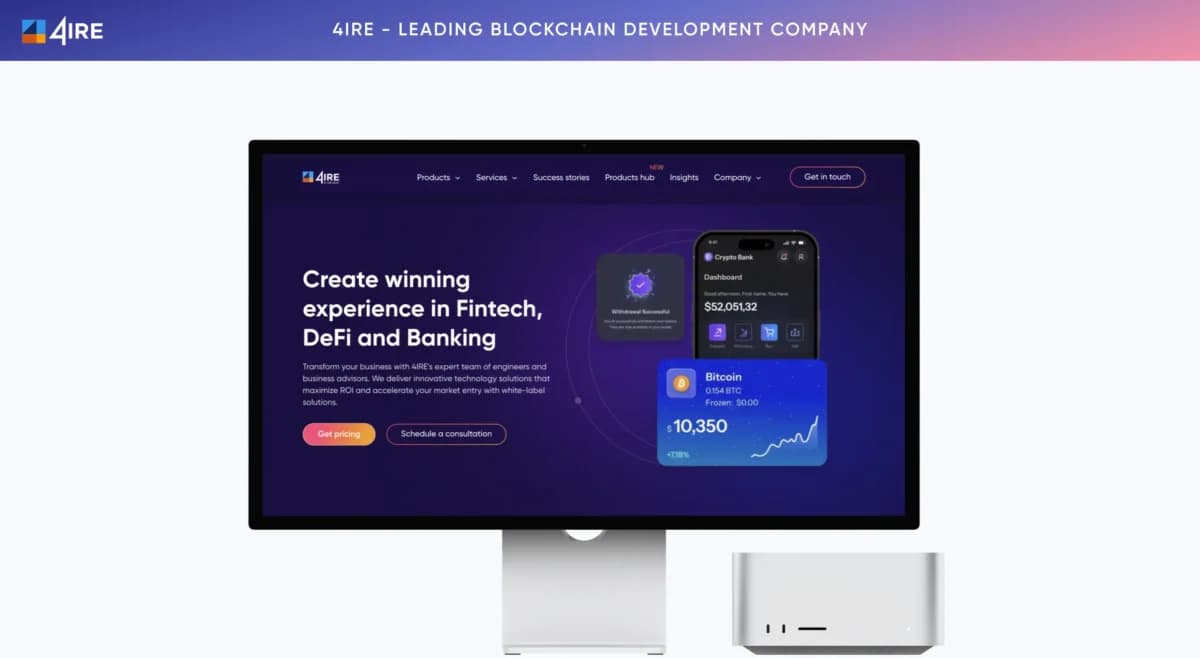
4IRE has built software for banks, fintechs and regulated enterprises since 2010 and has delivered more than 250 projects. Its work spans digital banking, on-chain finance and AI: custom blockchain and dApp development, DeFi protocols, crypto wallets, CEX and DEX platforms, real-world asset tokenization and manual smart contract and tokenomics audits. Banks it has worked with include Danske Bank, First Abu Dhabi Bank and Basisbank, and it built the front end and core smart contracts behind Ondo Finance's first DeFi vault product.
Alongside custom builds, 4IRE offers white-label products delivered with source code ownership, including the NeobankX neobank platform, a crypto banking suite and an RWA tokenization solution. Most engagements start with blockchain consulting and a scoped discovery phase. Best for: fintechs and financial institutions that need compliance-grade blockchain products, not just smart contracts.
2. Accubits
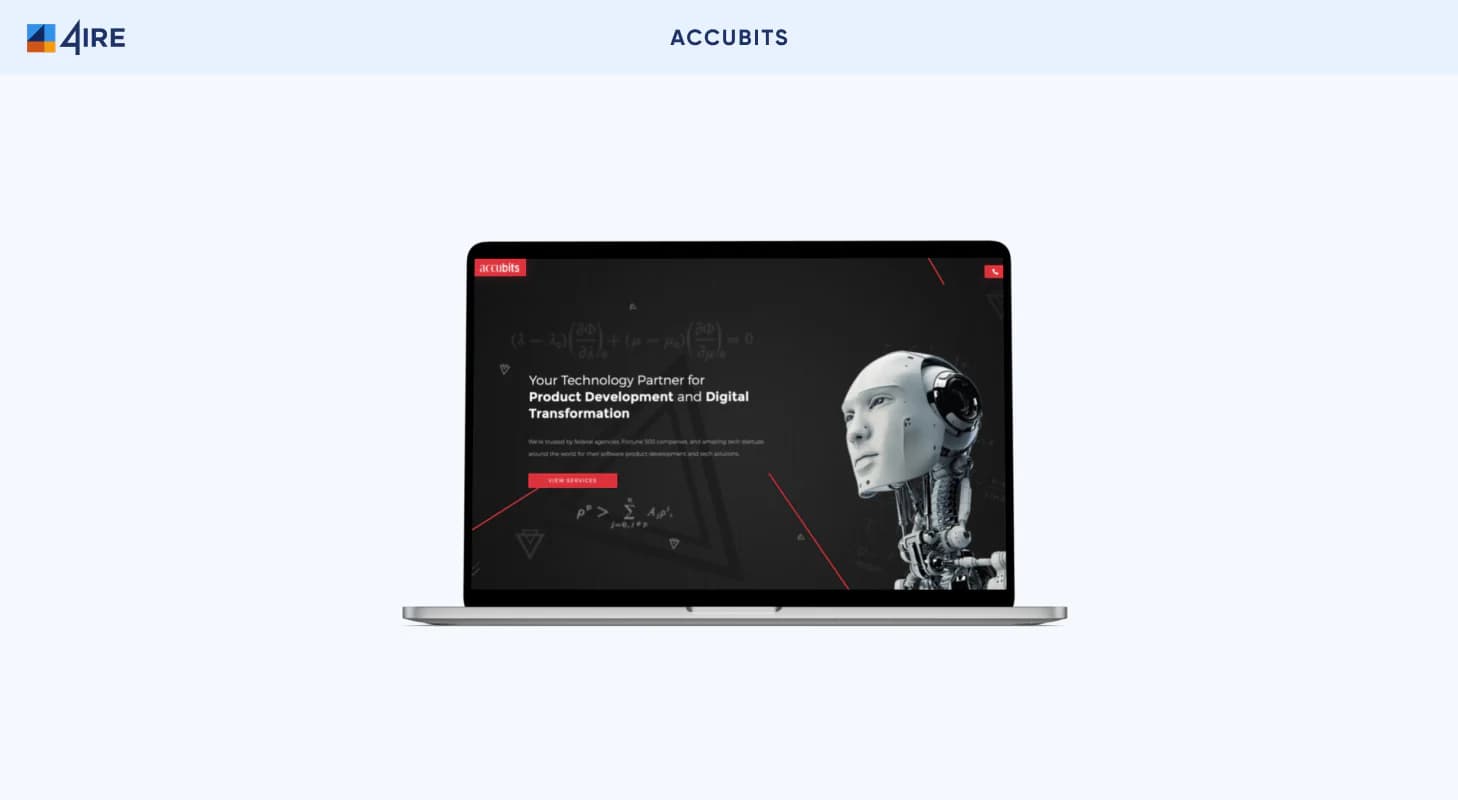
Accubits has repositioned itself around AI in recent years, with AI development, generative AI cost optimisation and an outcome-based delivery model among its services, but blockchain development remains one of its listed service lines and case-study categories, and its blog carries a large archive of blockchain material alongside newer AI posts (the latest dated September 2026). Best for: projects that combine AI features with a blockchain layer, where one vendor covering both is an advantage.
3. IdeaSoft
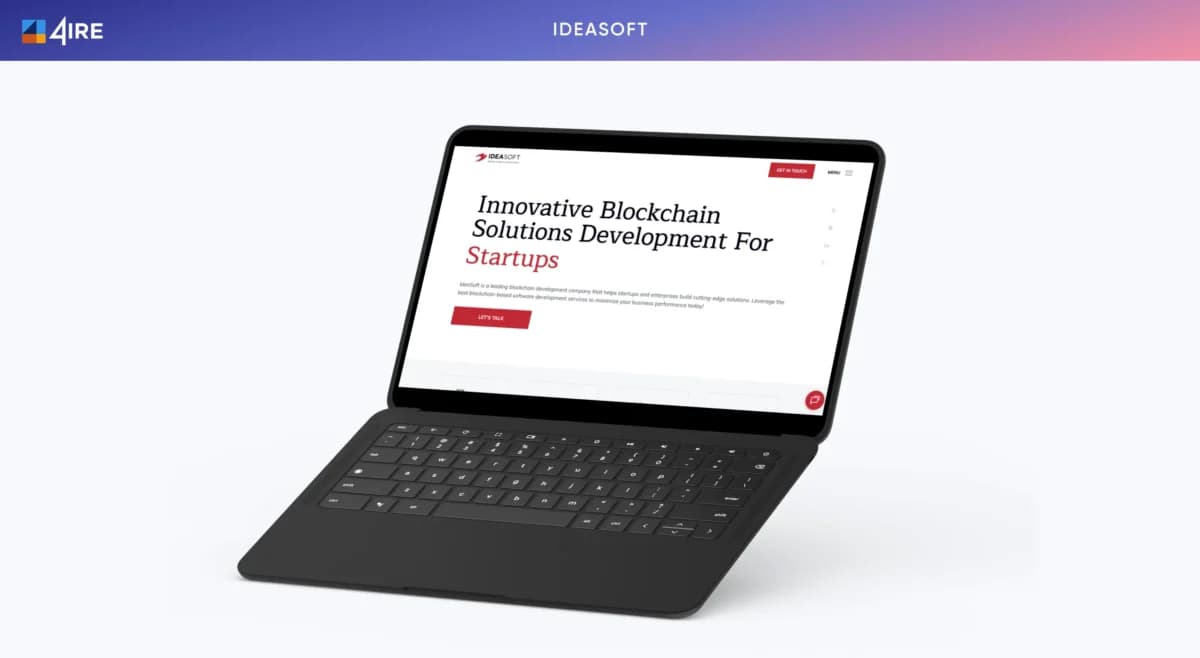
IdeaSoft has been in the market for about ten years and reports more than 250 completed projects. It works from Tallinn, Lisbon and Abu Dhabi and offers blockchain, crypto exchange, decentralized exchange, crypto wallet and fintech development, plus IT outstaffing. The company lists itself as a co-founder of Orderly Network and Global Ledger and names Securitize among its clients, for which it built a security token issuance platform. In September 2026 it announced a partnership with the ADI Foundation. Best for: exchange, wallet and trading infrastructure for crypto-native startups.
4. Innowise
Innowise is a large full-cycle software company, established in 2007, that reports more than 3,500 IT professionals and around 1,600 completed projects, with its headquarters in Warsaw. Its blockchain practice covers smart contracts, DeFi platforms, token development, cryptocurrency integration and dApps, and it holds ISO 9001 and ISO/IEC 27001 certifications. Its blog was updated several times in September 2026. Best for: enterprises that want blockchain work inside a broader software engagement with a large delivery bench.
5. Peiko
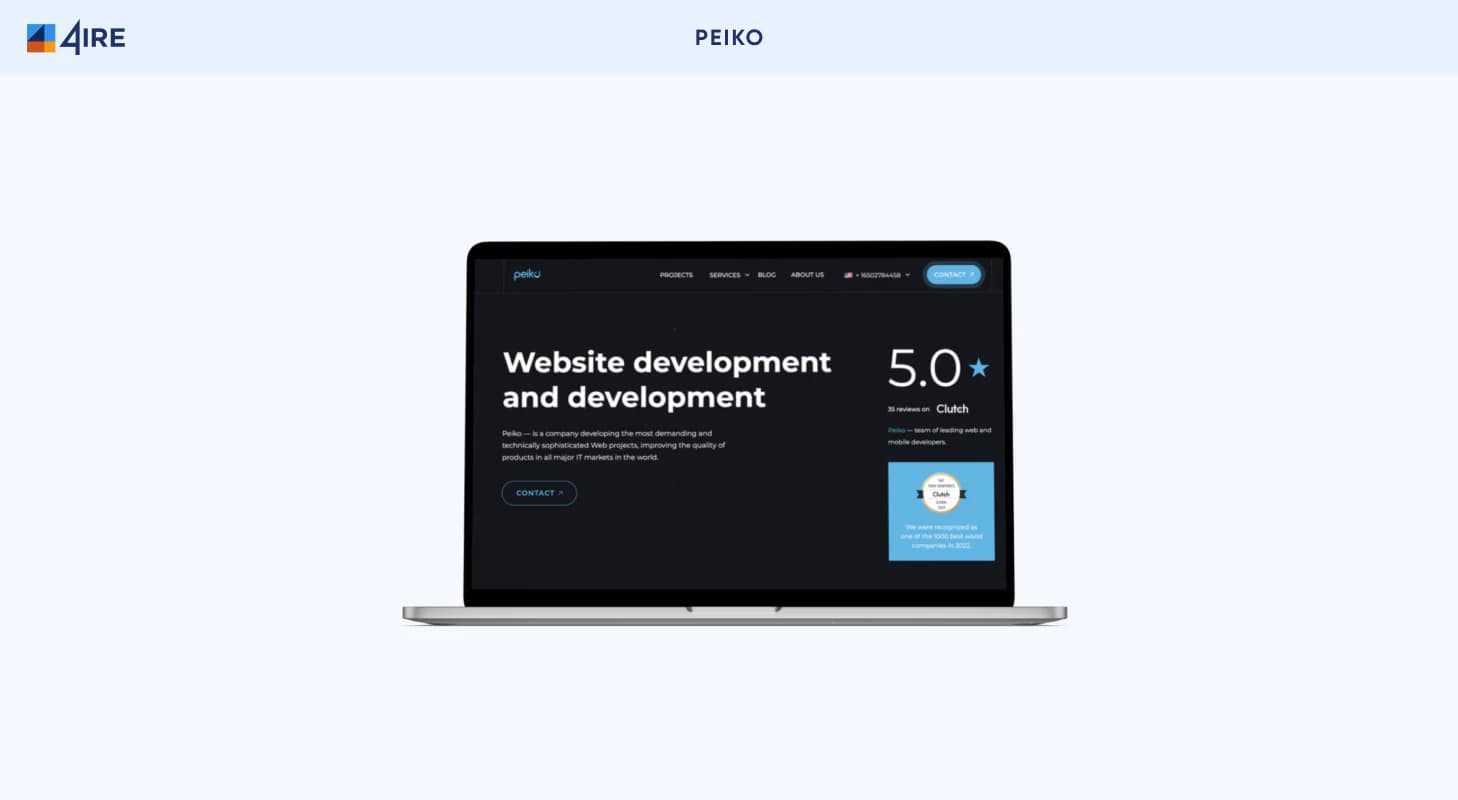
Peiko has been operating since 2017, with roots in Kyiv and offices across Europe and North America. Its Web3 portfolio includes decentralized exchanges, P2P crypto exchanges, crypto wallets, smart contracts and NFT marketplaces, and its recent writing covers Telegram Mini Apps and tokenomics design (updated in September 2026). Best for: startups that need a compact team for a Web3 MVP with a strong front end.
Matching a Vendor to Your Project
- Regulated financial product (neobank, custody, tokenized assets): prioritise compliance experience and white-label options that shorten time to market.
- Crypto-native product (exchange, wallet, DEX): prioritise chain expertise, security practice and trading infrastructure.
- Enterprise integration: prioritise delivery scale, certifications and experience with permissioned networks.
- Early MVP: prioritise a small senior team that can scope tightly and move fast.
Whichever path you choose, run a short paid discovery with your top two candidates before committing to the full build. It shows how each team asks questions, estimates and documents decisions. If your project is DeFi-specific, our list of top DeFi development companies narrows the field further, and if you prefer to extend your own team, see how to hire blockchain developers instead.
Trends Shaping Blockchain Development
- Tokenization of real-world assets is moving from pilots into regulated products, raising the bar for custody, KYC and reporting.
- Stablecoin payments are becoming a mainstream use case for cross-border and B2B settlement, now under explicit rules in the EU and the US.
- AI and blockchain together: AI agents that hold wallets or trigger on-chain actions need careful permission and key design.
- Cross-chain interoperability remains a major engineering and security risk, which makes bridge and messaging design a core skill.
- Compliance by design: MiCA authorisation is now mandatory for crypto-asset services to EU clients, so compliance tooling is part of the product, not an add-on.
Conclusion
The right blockchain development company is the one that has already solved problems like yours: the same chain, a similar regulatory regime and a comparable product. Use the checklist above, verify every claim against live products and references, and test the relationship with a short discovery phase before you commit. If you would like 4IRE to be one of the teams you compare, our blockchain consultants can review your idea and outline the architecture, timeline and budget.
Planning a Blockchain Product?
Tell us what you want to build, and our team will outline the architecture, compliance requirements, timeline and budget. Schedule a free consultation with our experts.
FAQ
Start with your product and platform, then shortlist teams that have shipped something similar on that chain. Check their security practice and regulatory experience, read independent reviews, speak to a past client and run a short paid discovery before signing a full contract.
It depends on scope. On 4IRE's own estimates, a custom DEX or AMM typically costs $120,000 to $250,000, while an independent smart contract audit starts around $5,000 to $15,000 for simple contracts and can reach $40,000 to $90,000 for complex DeFi protocols. A white-label product usually costs less than a custom build and launches faster.
Outsourcing is usually faster for a first product because the partner already has blockchain engineers, security reviewers and delivery processes. An in-house team makes sense once the product is proven and blockchain is core to your long-term roadmap. Many companies combine both: an external partner for the launch, then a gradual handover.
The engineers do not need to be lawyers, but the team must design for the regime you operate under. In the EU that means MiCA, whose transitional period for crypto-asset service providers ended on 1 July 2026; in the US, the GENIUS Act for payment stablecoins. Custody, KYC/AML and reporting requirements shape the architecture from day one.