Real Estate Tokenization 2026: Fractional Ownership for Global Investors

Are you in commercial real estate? Then the struggle with slow, illiquid asset sales, taking months and even years, is well known to you. But I have good news for you; as an expert deep in the tokenization trenches for years, I can give you my word that tokenization is flipping the entire industry on its head.
The industry that has just crossed $10 billion in value and is projected to exceed $4 trillion by 2035, enjoying solid support from financial giants like Deloitte and Forbes, can’t be a dummy idea.
With the volume of real-world asset tokenization on public blockchains alone reaching $18 billion in value this year, we can only guess how many of them are really tokenized.
That’s why a quick look at real estate market trends 2026 shows that this year is the time when tokenization is transforming from hype to the new normal.
Here, I am breaking down the real estate tokenization market and uncovering RWA benefits to inform wise, forward-looking decisions. It’s time to jump on the fast-moving tokenization train with realistic benefits guaranteed by blockchain innovation.
What Is Real Estate Tokenization?
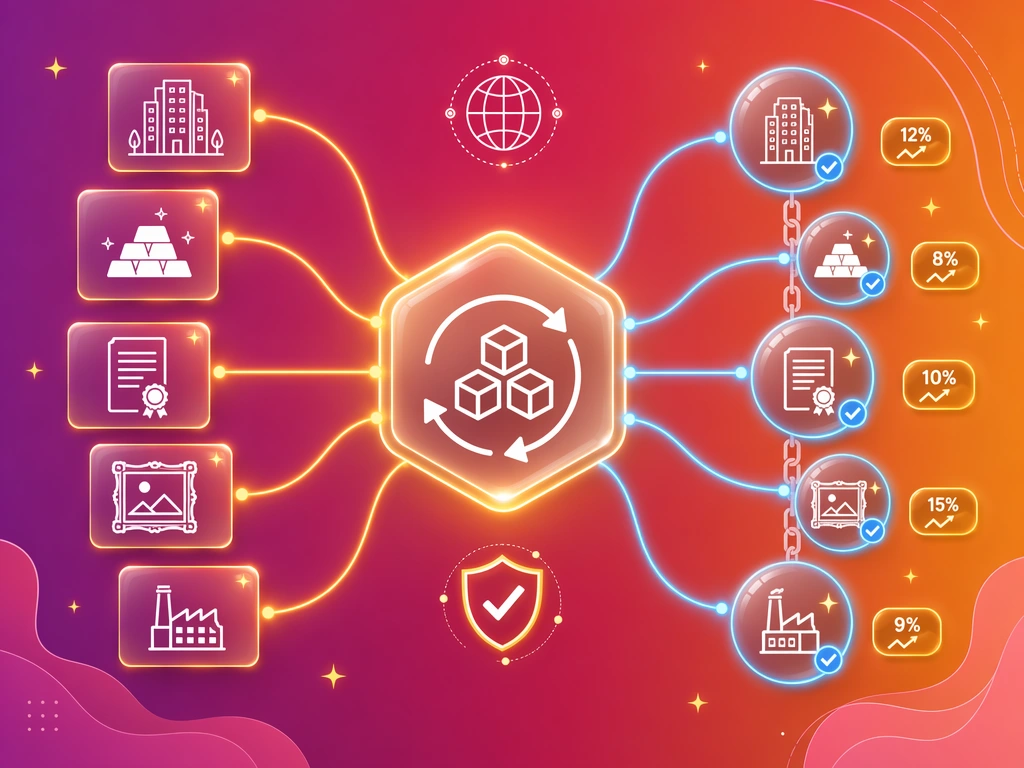
Real estate tokenization involves the process of transforming physical securities into a digital form with the help of blockchain technology.
Digital assets possess properties, functions, and value identical to their physical analogs, with the only difference – they become fungible. For instance, a large commercial building can’t be owned by 100 investors (it actually can, but the paperwork and legalities will be tremendous).
A digital analog of this commercial building can be owned by thousands of people, which becomes possible via real estate fractionalization. In this regard, a tokenized RWA turns into a form of currency, which gives it unprecedented properties of liquidity and circulation.
Explosive growth in real estate tokenization shows that the market is ripe for greater liquidity and accessibility of these assets.
Only $0.3 trillion of real estate property was tokenized in 2024, while the 2035 projection for security token offerings for real estate by Deloitte exceeds $4 trillion.
This gives us an impressive CAGR of 27%+, suggesting the trend’s strength in the long run and building a case for launching your own RWA tokenization solution for a steady income stream in the industry.
Key Growth Drivers
Tokenization of real estate objects gains traction because of numerous growth drivers connected with both technological innovation and historical shortcomings of the real estate market. The main stimuli of this industry’s growth are as follows:
- Limitations of traditional real estate management. Real estate operations have always been troubled by asset illiquidity, high entry barriers, and high commissions of intermediaries and financial institutions overseeing the deals. Tokenized real estate requires no intermediary participation, reduces entry barriers to under $1,000, ensures liquidity of large-scale real estate objects, and reduces transactional costs due to blockchain technology.
- Integration of RWA tokenization with DeFi and cross-chain technologies. Real estate token trading, storage, and movement has become borderless, secure, and efficient due to the creation of blockchain ecosystems uniting DeFi solutions for payments, cross-chain technologies for frictionless asset movement across blockchains, and additional services like wallets for storage or automated dividend distribution mechanisms.
- ESG-focused tokenization. RWA tokenization opens access to projects and companies committed to environmental sustainability, social responsibility, and ethical governance (ESG) principles. With a strong ESG focus among modern businesses, ESG asset tokenization boosts their visibility, global access to green investments, and operational efficiency.
- Regional concentration of real estate tokenization. The USA takes the lead in real estate tokenization, with many large-scale players issuing tokenized commercial funds, debt, and real estate property projects. The Middle East is also keeping a quick pace in the tokenization market growth, with Dubai’s 2025 pilot project targeting 7% of the national property market. Singapore and Hong Kong are leaders in real estate tokenization in the Asia-Pacific region, while the greatest activity in Europe is observed in Luxembourg, Switzerland, and Germany.
Regulatory Developments in 2025
Regulatory compliance in tokenization is a major pillar guaranteeing investors’ safety. That’s why lots of work is directed toward the harmonization of the regulatory environment in separate jurisdictions and on the international level.
The main advancements in this area include:
- Project Guardian by the Monetary Authority of Singapore (MAS), in partnership with JPMorgan Chase, DBS Bank, and Marketnode. The project targets safe wholesale digital asset borrowing and lending under MAS licensure.
- MiCA recognition of real estate tokens as utility tokens in the EU, which gives investors protection of ownership rights, though under lighter regulatory constraints compared to security tokens or financial instruments.
- Trump’s executive order, signed in 2025 to give 401(k) investors access to alternative assets, including real estate tokens.
Benefits of Real Estate Tokenization for Commercial Investors
Tokenization of real estate assets comes with many evident pros that forward-looking investors and fund managers are exploring right now.
- Enhanced liquidity. Real estate is an asset requiring large upfront capital investments. Therefore, only large players with extensive budgets used to dominate the real estate market. Tokenization has arrived as a game-changer in this industry by enabling large objects’ division into small, affordable fractions available for purchase, ownership, and revenue generation. A digital register of members is created for every real estate object on the blockchain, simplifying property management and revenue distribution. This way, similar to the tokenization of gold, a traditionally illiquid precious metal, real estate tokenization boosts such assets’ liquidity. On-chain real estate transactions can be settled within seconds, instead of days or weeks of tedious settlements via traditional channels.
- Reduced entry barriers for international participation. Buying real estate in a foreign country used to be a headache with lots of demanding paperwork. Regulatory compliance, international ownership rules, and cross-border transactions demotivated foreign investors from tapping into lucrative real estate niches. However, tokenization of real estate has enabled greater operational efficiency for operations with real estate by automating compliance checks, enabling efficient investor shortlisting, and making dividend distribution programmable on blockchain. This way, cross-border friction in real estate management has disappeared, giving investors greater access to markets and objects of interest. This benefit is pronounced in the example of carbon credits tokenization, which enabled a fast digital transformation in a complex, fragmented, and reactive global industry of carbon credit trading.
- Secure tokenization via custom tokenization solutions. While blockchain is a generally safe, innovative technology, customization of RWA solutions for enterprise-level use adds an extra security layer. Smart contracts in real estate operate on a secure blockchain infrastructure, equipped with robust encryption and programmable blockchain logic, and come with fewer cybersecurity risks compared to traditional digital tools for real estate management.
- Cost reduction and transparency. Real estate tokenization comes with considerable cost savings for all market participants. Reduced operational costs, fewer expert staff involved in deal settlement, reduced cross-border real estate access barriers, and customizable fee structures make real estate investment a far more affordable and convenient business. Besides, the transparency and immutability properties of blockchain remove guesswork, fraud, and market manipulation from the industry, with all data available to interested reviewers in the public or private ledger.
How Fractional Ownership Works in Tokenized Real Estate
Wondering how to tokenize real estate? Let’s break the fractionalization process down into clear steps to show the backstage of turning a real estate property into a digital asset.
- Asset Selection. You need to identify the tokenized asset and categorize it properly. It may be an existing property object, real estate in development, or the entire portfolio of real estate objects.
- Legal Structuring. Governing documentation should be drafted, with a special purpose vehicle (SPV) that holds the property title, operating agreement, shareholders’ agreement, and trust deed to validate the object’s digitization.
- Blockchain selection and tokenomics. The total supply and price of tokens is agreed upon, with dividend or coupon policies, fees, and settlement details laid out. Token ownership should also be linked to specific real-world rights, such as voting, the right to receive confidential information about the object’s management, distribution of revenue, and redemption.
- Token minting. EVM-compatible blockchains are typically used to mint ERC-1400/3643 tokens for real estate property tokenization. The team should also choose the portal for token issuance in advance, ensure KYC/AML compliance, and prepare wallets or custody solutions for property owners. Compliance control mechanisms and technical infrastructure for rolling tokens out to secondary markets should also be designed.
- Distribution. This final stage occurs when smart contracts are built and verified, investors are onboarded via robust KYC/AML protocols, and token allocations are confirmed. Once all participants receive their tokens, the on-chain token registry starts recording token transactions. It should also be synchronized with an offline legal register for real estate operations to ensure jurisdictional compliance.

This process may be conducted using off-the-shelf platforms for RWA tokenization (e.g., Zoniqx or Stobox) or setting up your own, private blockchain infrastructure for asset tokenization, distribution, and ownership management. While the first option makes the process fast and easy, the second one adds sustainability and safety to this process.
Thus, I strongly recommend going for a custom solution that will keep you in control of your assets and enable ongoing asset management digitization. The cost to build a tokenization platform will pay off quickly in the form of investor trust and safe token management.
It also makes sense to dive into the practical side of tokenized assets. Here are a couple of case studies to illustrate how the big names in real estate do it, and how you can also leverage tokenization solutions for your business success.
- Kin Capital’s $100 debt fund – Kin Capital launched a $100 fund of tokenized real estate debt available for accredited investors, powered by the Chintai blockchain platform. It targets asset liquidity enhancement by combining traditional finance with DeFi to offer a yield of up to 15% to investors.
- BrickMark’s commercial acquisition – BrickMark and Dynasty Global Investments AG struck an acquisition deal using the latter’s cryptocurrency D¥N, a real estate portfolio-backed token.
- Red Swan’s CRE Marketplace – A FinTech company has recently tokenized its $2.2 billion portfolio of commercial real estate using Polymath technology.
- Qarat in the UAE – a pilot program launched by the Dubai Land Department (DLD) to tokenize real estate and virtual assets.
- RealIT/Lofty for rentals – a US project tokenizing single-family rental homes with ERC-20 tokens, disbursing rental income to holders in DAI stablecoins every day.
Benefits of Real Estate Tokenization vs. Traditional Investments
| Aspect | Traditional Real Estate | Tokenized Real Estate | Benefits for Global Investors |
|---|---|---|---|
| Liquidity | Low (months to sell) | High (days/seconds via secondary markets) | Faster capital access |
| Minimum Investment | High ($100K+) | Low ($1K+) | Democratizes access for international retail investors |
| Global Reach | Limited by location | Borderless | Attracts diverse investors without intermediaries |
| Transparency | Opaque paperwork | Blockchain-verified | Reduces fraud, builds trust |
| Income Distribution | Manual, delayed | Automated via smart contracts | Real-time rentals/dividends |
Key Real Estate Tokenization Case Studies in 2025
| Project/Company | Asset Type | Value (USD) | Key Outcome | Source |
|---|---|---|---|---|
| Kin Capital | RE Debt Fund | $100 Million | Fractional sales to investors | BlockchainX |
| BrickMark | Commercial Building | Global institutional access on Chintai | Primior | Varies |
| Red Swan | Commercial Portfolio | Deloitte | $2.2 Billion | Global investor platform |
| Qarat (UAE) | Dubai Commercial RE | 130 Million CHF | Tokenized for liquidity | BlockchainX |
Conclusion
This market analysis and case studies illustrate my main point – real estate tokenization is the future of flexible, accessible, and liquid real estate management with tons of benefits for all stakeholders.
With a humble estimate from real estate oracles for the market to reach $3 trillion by 2030, tokenized real estate will represent almost 15% of assets under management. These figures, coupled with industry leaders’ reports, position tokenization as a technically superior alternative to REITs, especially when it comes to commercial asset management.
Private, non-SaaS-dependent infrastructures offer unprecedented liquidity for real estate, coupled with cost reduction and transparency of real estate operations recorded in blockchain ledgers.
These changes will inevitably improve global access to real estate, lower access barriers, and enable a safe, fraud-proof market with considerable returns.
Thus, it’s up to you to choose how you join this expanding market – as a user of ready solutions or a creator of your own tokenization infrastructure with unlimited capacity. Unlock the liquidity of your real estate assets without limiting SaaS dependencies – launch a real estate tokenization platform with 4IRE. Contact us today to get a free consultation on all aspects of the project, from idea to a smooth launch. Our real estate tokenization company guarantees technically and financially superior solutions based on thorough market analysis and a nuanced understanding of industry trends.
FAQ on Real Estate Tokenization in 2026
Once the tokenization deal gets structured with the owners of real estate property, it gets digitized, meaning that the ownership documentation is uploaded to the blockchain and coded with smart contracts. Based on the logic incorporated in smart contracts, a specific number of security tokens is issued as a digital analog of the digitized object. Those tokens are distributed to real estate owners in line with the percentage of their fractional ownership, and these tokens become available for storage or secondary market trading.
The best way is to use a proprietary real estate tokenization platform developed in partnership with a trusted software provider like 4IRE. This way, you will be able to control the entire process of property tokenization on your terms, ensuring the security of token circulation and trading in the blockchain space.
Digital asset ownership works similarly to offline asset ownership, but tokenized real estate is fungible, unlike its physical analog. For this reason, interested investors can enter the global real estate investment niche with small budgets. For instance, while traditional real estate investments are rarely accessible with budgets under 100K+, blockchain real estate can be purchased for as little as $1,000.
Commercial property tokenization moves all real estate deals to blockchain, thus simplifying access to cross-border objects. RWA smart contracts come with programmable logic that automates compliance checks and investor audits, thus removing the lengthy process of deal preparation and facilitating international real estate investments.
The global market of real estate tokenization is witnessing unprecedented institutional adoption in 2026, with market giants entering the field and maturing regulatory environments for securing digitized property rights. There are also evident regional growth trends, with the USA, the UAE, and the UK taking the lead in this area.
When real estate objects turn from illiquid to liquid assets, they acquire the property of fungible, liquid assets and can be owned in small fractions, traded on secure exchanges, or sold in secondary markets. This way, the digitization of large-scale real estate objects turns them into more flexible assets divided into small tradable fractions.
Yes, 4IRE offers a fully customizable infrastructure for digital real estate marketplaces, which can simplify and automate RWA tokenization activities for a variety of market players. We offer secure, modular tokenization software products that can be designed and expanded to reflect your brand.
-

 Verified Expert in Blockchain
 - 16 Years of Experience


Similar articles
More articles