

 AI

ChatGPT went from a novelty to infrastructure faster than almost any consumer product in crypto's history. By 2026, most exchanges, wallets and DeFi front-ends ship some kind of conversational assistant, and a growing share of them are built directly on ChatGPT or a comparable large language model rather than a custom rules-based bot. Below, the 4IRE team looks at where ChatGPT is actually earning its keep in blockchain products today, what it's good and bad at, and how green finance and carbon-credit platforms specifically are putting it to work.
ChatGPT use cases in blockchain products
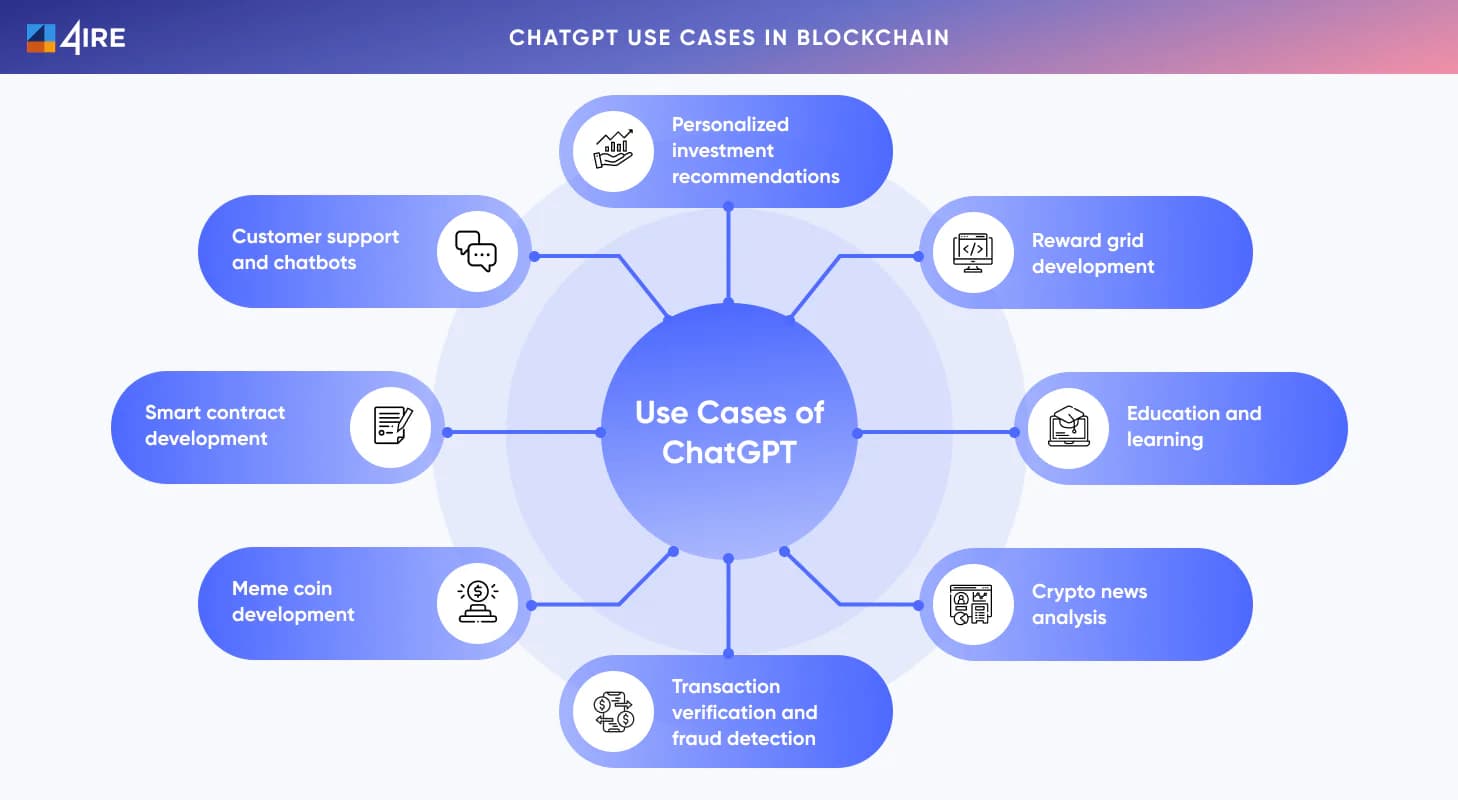
Beyond the obvious (naming a token or drafting marketing copy about cryptocurrency), the use cases that hold up in production tend to be narrower and more operational:
- Onboarding and education. A ChatGPT-based assistant that can explain gas fees, wallet recovery or a failed transaction in plain language measurably reduces first-week drop-off for new users, because it answers the specific question a person has instead of pointing them at a help-center article.
- Customer support. Conversational AI handles the bulk of repetitive support tickets (password resets, deposit status, fee questions) and routes anything that touches funds or account security to a human.
- Crypto news and research summarization. Teams use ChatGPT to condense the day's protocol updates, governance proposals and market commentary into a short internal or user-facing digest, which is a real time saver even though the underlying judgment calls still need a human.
- Smart contract drafting assistance. ChatGPT can produce a first draft of common contract patterns, but every line still needs review by a developer and an independent smart contract audit. Treat it as a drafting aid, never as the final reviewer.
- Transaction-pattern explanation. Pointed at transaction data through a tool call, an LLM can describe what a wallet did in plain English, which is useful for support and light fraud triage but is not a substitute for a dedicated monitoring system.
- Market and portfolio commentary. Traders use ChatGPT to summarize price action and news around a position; it should not be treated as financial advice or a signal generator, and reputable products say so explicitly.
ChatGPT in green finance and carbon credit platforms
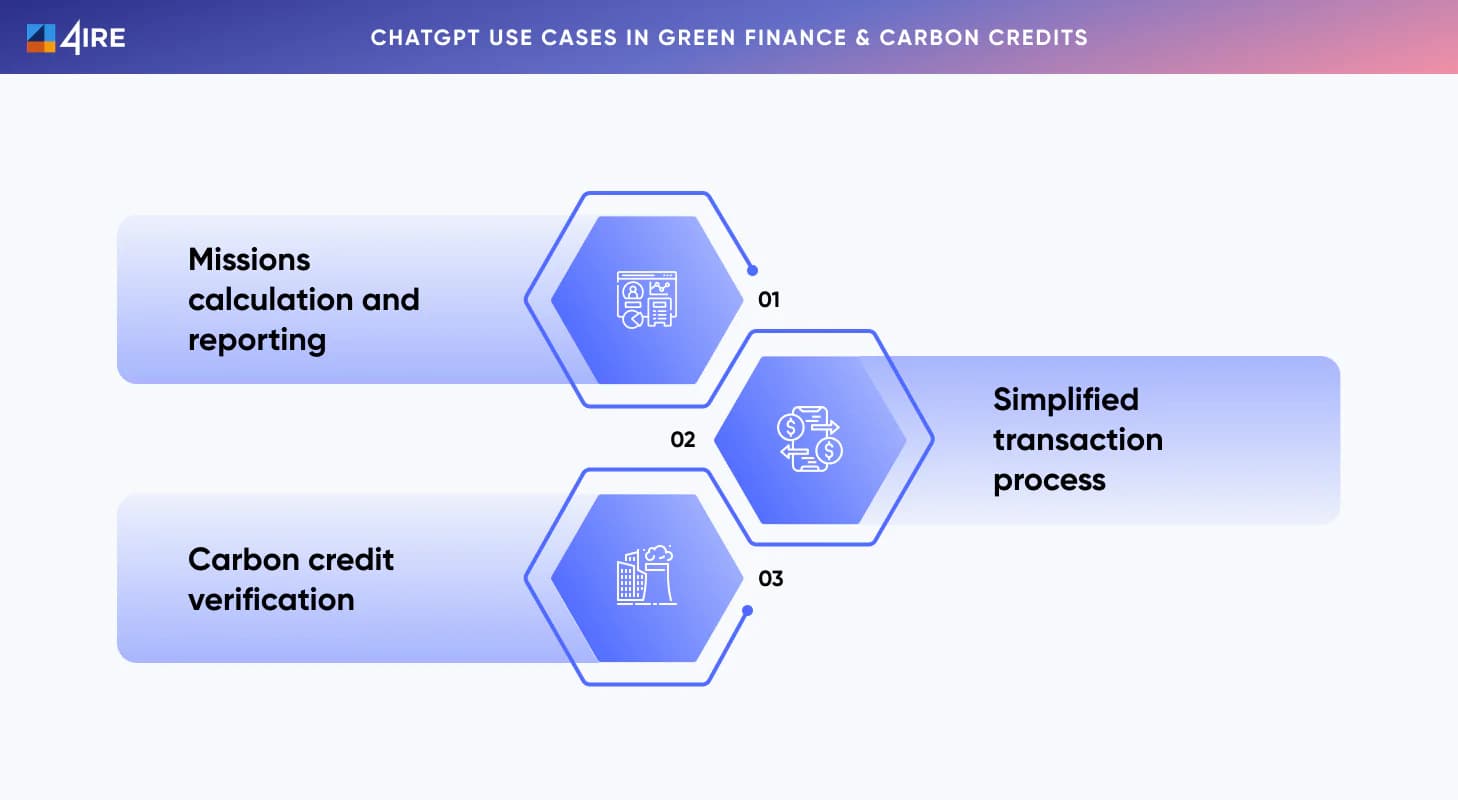
Green finance is one of the more concrete places a conversational assistant helps, because the underlying data (emissions factors, project documentation, credit registries) is dense and not written for a general audience.
- Emissions estimation support. Teams are experimenting with using ChatGPT and similar models as a research aid for estimating category-level emissions from spend data, drawing on public emission-factor datasets such as the US EPA's Supply Chain Greenhouse Gas Emission Factors. This is a starting point for analysts, not a certified measurement: any number that ends up in a compliance filing still needs a proper carbon accounting methodology behind it.
- Buyer and seller communication. On a carbon credit marketplace, a conversational layer can walk a buyer through credit types, vintage and registry status, and handle routine negotiation and documentation questions that would otherwise sit in a support queue.
- Document summarization for credit verification. Project design documents and verification reports run to hundreds of pages. An LLM can produce a first-pass summary flagging the registry, methodology and vintage for a human verifier to check. It should never be the final word on whether a credit is legitimate, given how much the market has already been burned by weak verification.
Why teams are adopting it
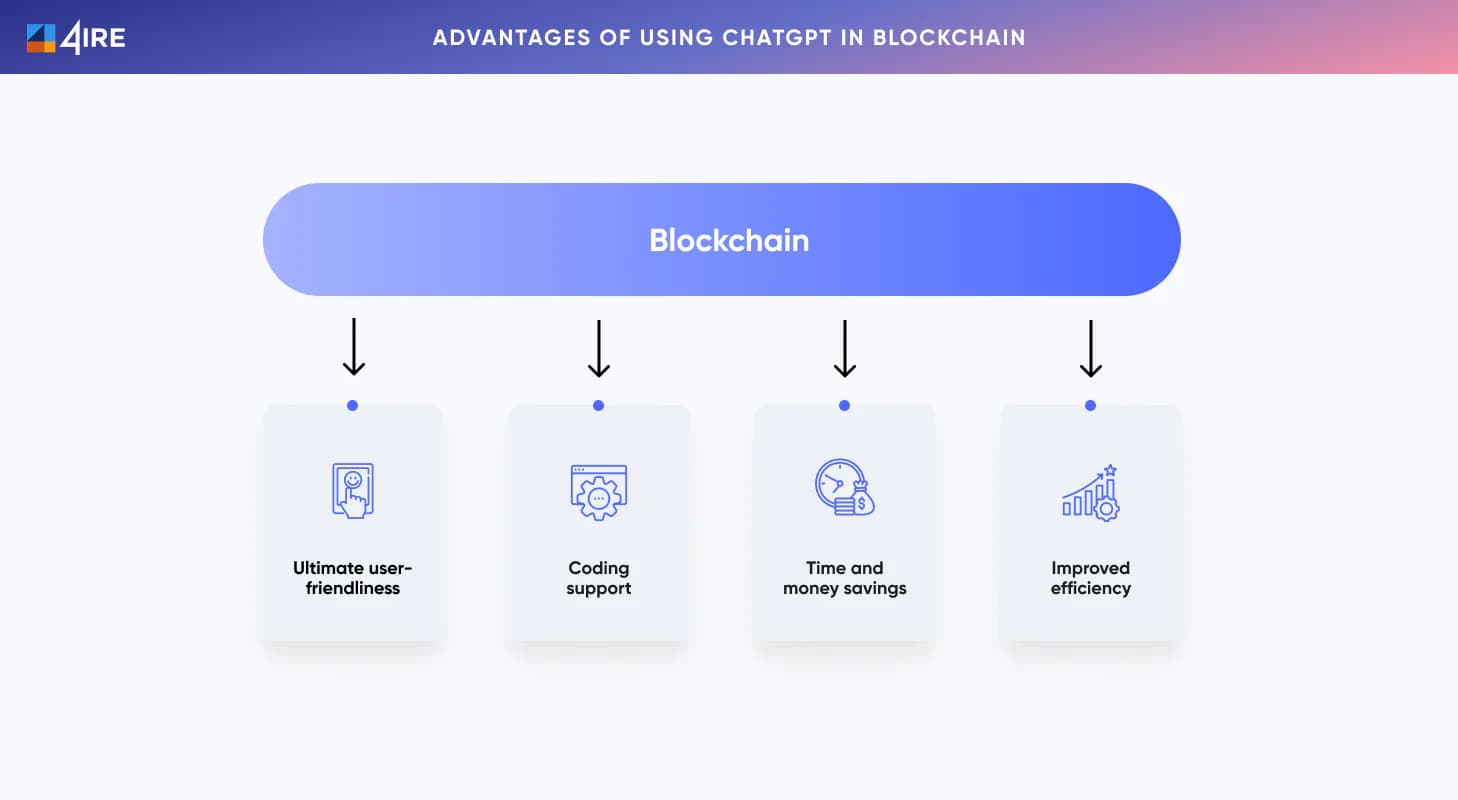
- Approachability. A conversational interface lowers the barrier for users who find wallets, gas fees and blockchain explorers intimidating.
- Coding support. Developers use ChatGPT to scaffold code and debug faster, which shows up most in DEXs and dApps with fast-moving frontend code.
- Cost. Automating a meaningful share of support volume is one of the more measurable savings AI has delivered in crypto operations, though the exact percentage varies enormously by product and ticket mix.
- Scale. One well-tuned assistant can hold far more simultaneous conversations than a support team, without a proportional headcount increase.
Where ChatGPT falls short in crypto
None of this works unattended. ChatGPT and comparable models still hallucinate confidently, inherit bias from training data, and offer no guarantee of data privacy for whatever a user types into the chat box. In a space where a wrong answer can mean an approved transaction sending funds to the wrong address, every AI-assisted workflow that touches money or security needs a human checkpoint, and every team building one should work with engineers who understand both the model's limits and the underlying chain. Our blockchain developers review AI-assisted crypto integrations for exactly this reason.
How 4IRE can help
If you're weighing where a conversational AI layer fits in your product, 4IRE has delivered crypto wallet and full-scale cryptocurrency development projects across exchanges, NFT platforms and GreenFi tools, and can help you scope an integration that keeps the model in its useful lane (support, education, drafting) while keeping humans and code reviews in charge of anything irreversible.
Conclusion
ChatGPT and the LLMs that followed it didn't just add a chat window to crypto products. They changed how onboarding, support and even carbon-credit documentation review get done. The teams getting real value from it treat it as a fast, tireless assistant with a narrow, well-defined job, not as a replacement for the humans and audits that still have to sign off on anything that moves money or certifies an environmental claim.
Add AI the Right Way to Your Platform
Thinking about a ChatGPT-powered assistant for your exchange, wallet or GreenFi platform? Let's scope where it helps and where a human still needs to sign off.
FAQ
ChatGPT can produce confident, wrong answers, and it carries whatever bias existed in its training data. It offers no guarantee of data privacy for what a user types into it. Any workflow that touches funds, security settings or compliance decisions needs a human checkpoint and, for code, an independent audit.
Cost depends on scope. Using OpenAI's API is usage-based and scales with volume; the larger cost driver is usually the integration work (wiring the assistant to your product's data, adding guardrails, and testing it against edge cases) rather than the model access itself.
The use cases that hold up in production are onboarding and support, transaction and fee explanation, crypto news summarization, smart-contract drafting assistance (always followed by a human review and audit), and document summarization for carbon-credit or compliance review. Treat anything beyond that (trading signals, financial advice, final contract sign-off) with real caution.
It gives users a plain-language way to ask what a transaction did, why a swap failed, or what a specific credit type means, instead of parsing a block explorer or a help article. That reduces first-week drop-off for new users and cuts support ticket volume for routine questions.