Gold Tokenization in 2026: What It Is, How It Works, and How to Build Your Own Platform

Gold has been regarded as a safe investor haven since time immemorial. This precious metal was highly valued even in ancient times, symbolizing wealth and status. However, physical gold investments have been heavily limited in most countries throughout the 19th and 20th centuries, restricting retail investors’ access to bullion gold. Eventually, it resulted in the launch of gold exchange-traded funds (ETFs) in the 21st century.
All in all, as blockchain technology gained more credits and recognition worldwide, digital gold emerged as a new trading asset. The tokenization of gold is one of the blockchain use cases that is gaining popularity among crypto enthusiasts, investors, and businesses. The present-day market cap of tokenized gold has already surpassed $1.4 billion, which eloquently demonstrates the upward trend of physical gold prices.
But is investing in tokenized gold as safe as in physical gold? What are the benefits of tokenized gold, and what risks are involved? This article provides an in-depth introduction to blockchain technology in gold.
Tokenized Gold Assets: How Do They Work?
Let’s first take a closer look at how investment works in the physical vs. tokenized gold markets. Direct investment in physical gold has been banned for a long time, and investors could only use specific securities, like stocks of gold-mining companies or gold ETFs, to gain a fair share of the rising gold prices.
Yet, these gold strategies have nuances and limitations. First, by buying shares of gold-mining businesses, investors may only indirectly take advantage of the gold price and sustain the risks of the company’s location, quality of leadership, operational challenges, etc. The company’s business may fail even with a steadily rising gold price.
Investment in ETFs is a safer option in terms of pure gold investment. Yet, ETFs are not stocks, bonds, or other securities that you may hold in your bank account and exchange for physical gold. In most cases, gold ETFs are only derivatives of the stock exchange and an owner doesn’t own the precious metal.
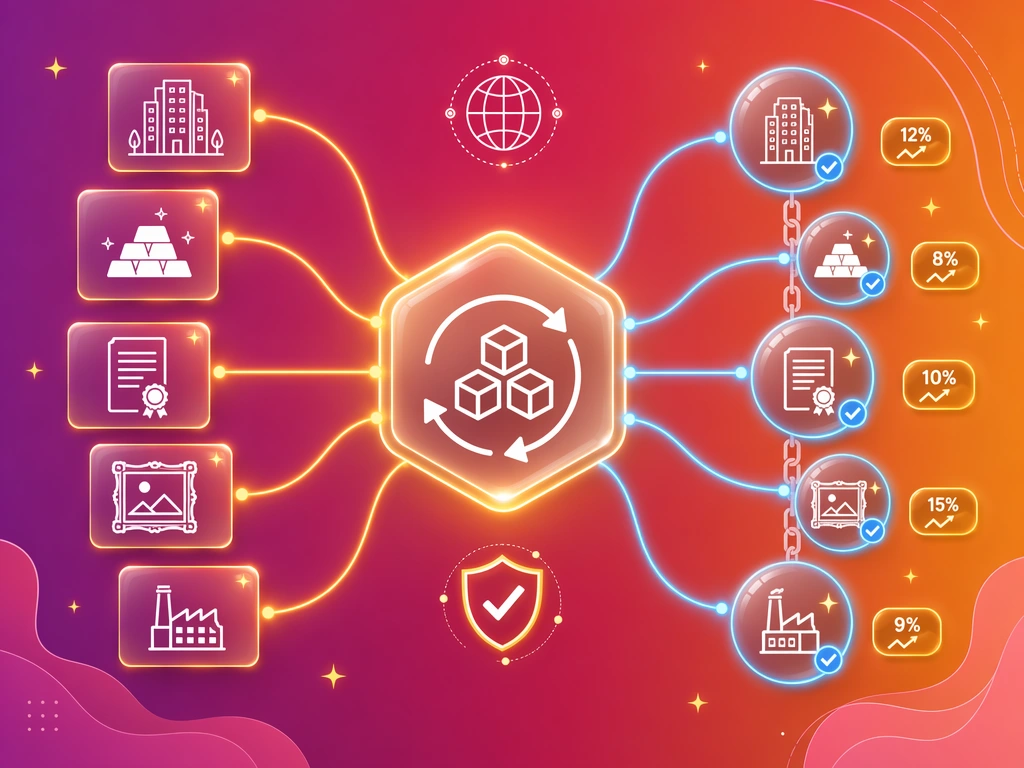
When it comes to investment in tokenized gold, things are much more transparent and simpler for investors here. The scheme works as follows:
- A project acquires a certain amount of physical gold and stores it securely in its deposits.
- The company issues tokenized gold coins, the cumulative number and value of which equal the amount of gold in its vaults.
- The coins get into circulation and are used by traders, project users, buyers, and sellers. Their price is stably pegged to the price of gold, and in some cases, the coins may be exchanged for the respective amount of physical gold at any moment the owner claims such a possibility.
This way, you may perceive digital gold as gold ownership tokens — securities that verify your right to a specific amount of physical gold.
The same system works with tokenized gold ETFs — they are typically compiled of a group of gold-backed coins and help you invest in the whole niche instead of one or two issuers. This way, you distribute risks and can receive a more even ROI from the cumulative dynamics of gold prices.

Challenges of Physical Gold Ownership and Investment
Today, people can buy physical gold in a bank or a specialized firm. Yet, despite its indisputable stability and reliability in the long run, such a method of gold investment blocks investors’ money in gold bullion for years to come. In other words, your money invested in gold loses its operational efficiency, and you can’t apply these funds elsewhere.
Selling physical gold is not as quick and easy as you may expect. You will need to find an interested party to purchase your bullion gold at a favorable price since banks usually acquire gold from retail sellers at a heavy discount from the net gold price.
Besides, there is always a problem of fungibility. For instance, you have a 5-ounce gold bar but want to sell only 1 ounce. Cutting the bullion into pieces may be problematic, expensive, and inexpedient; on top of that, it may also cause some waste of this precious metal while each gram counts. Secure gold transactions are also a problem, especially if you’re a buyer; there is always a risk of purchasing a gold bar with impurities or a fake.
Finally, the costs of gold storage may outweigh the benefit you receive from its mounting price; since these assets are very expensive, you won’t just keep them in a box at home. You will need a safe bank deposit box, which costs money. Finally, you’re likely to insure your gold from theft or damage which means additional expenditures.
The Role of Blockchain in Gold Investment
All of the risks and challenges with digital gold security, liquidity, and fungibility have given rise and popularity to the tokenized gold market. Digital gold is equivalent to physical gold stored in a safe location by the coin’s issuer, which frees you from the need to take care of the gold storage solutions.
At the same time, every coin you own comes with the ownership right for physical gold, giving you direct ownership rights, unlike those of gold ETF investments. These are the reasons why tokenization of precious metals has become so popular in the crypto space.
Benefits and Investment Opportunities of Gold Tokenization
Digital gold investment and the wider trading of gold-backed coins have considerable advantages over trading within the traditional gold market. Digital gold investing provides you with the following unique benefits:
- Lower entry threshold. You can own a small fractional share of a gold token, which is much smaller than the smallest gold bar. This feature makes it possible to start your gold investments from as little as $10.
- Global Accessibility. Unlike physical gold, tokenized gold can be traded 24/7 worldwide, without geographical restrictions.
- Transactional transparency. The main feature of blockchain is a public ledger that makes all transactions traceable and open for all users. This is why fraud and manipulation are largely impossible on the blockchain.
- Lower Costs. Eliminates storage fees, insurance costs, and middlemen, reducing overall investment costs.
- Liquidity and operational efficiency of digital gold. Unlike with physical gold, you can buy and sell your coins very quickly. Thus, it is easy to conduct frequent transactions with gold to take advantage of slight price changes, which is generally impossible with bullion gold.
All in all, gold investments open many exciting opportunities for you. First, you can address inflation by investing in this conservative instrument with fewer risks and limitations. Second, you can take advantage of the rising gold prices similar to traditional gold investments. Third, getting some digital gold to your portfolio is always a great diversification measure that can protect your assets from rapid price turns in the crypto market.

Gold Tokenization Process
So, how to tokenize gold in technical terms? Here is an algorithm that most projects apply:
- Asset verification and authentication. You need to prove you have the amount of physical gold that you’re planning to turn into tokens.
- Selection of the tokenization platform. Among the diversity of gold tokenization platforms, you choose the one on which your tokens will be minted (e.g., Polymath, Meld Gold, Tokensoft, etc.).
- Creation of smart contracts. As all crypto operates using smart contracts, you should also create one that will peg a certain amount of gold to your token and include the digital seal of ownership into it.
- Token issuance. That’s the exact stage of your tokens’ minting based on the logic you’ve incorporated into your smart contract.
- Custody of physical gold. As a custodian, you have to ensure secure storage of physical gold. For this purpose, you can use the services of trusted third parties or financial institutions.
- Tokenization. Your physical gold gets pegged to your issued tokens.
- Liquidity and trading. You issue the tokens into circulation and ensure that there is no price slippage for users who want to buy or sell them.
- Regulatory compliance. Gold-backed cryptocurrency must to comply with general regulations on digital assets in terms of issuance, circulation, custody, and exchange for physical gold.
Security and auditing. You should provide timely updates and reports on the secure storage of physical gold backing your assets.
Release Your Tokenized Gold Project With Our Blockchain Experts
Our team of skilled developers and strategic minds delivers robust blockchain solutions under tight deadlines and at affordable prices. Schedule a free consultation now.

Tokenized Gold Projects’ Examples
What are the best-known projects in the gold token market? Here are several notable players standing at the origins of blockchain gold management.
- Tether Gold (XAUT). A world-known issuer of the USD analog in the crypto space, Tether launched a gold-backed cryptocurrency, XAUT. The whole amount of gold supported by these tokens is stored in a secure Swiss vault, and 1 XAUT equals one troy ounce of gold you may claim at any moment.
- PAX Gold (PAXG). This token represents the gold reserves of Paxos Trust Company, which keeps its gold in Brink’s vaults and also equates 1 PAXG to one troy ounce of gold.
- DigixGlobal (DGX). Digix is a crypto project aimed to democratize gold ownership and give anyone access to digitized gold. It has launched DGX, with each token backed by the company’s proprietary Proof of Provenance protocol. One DGX equals one gram of gold.
There are dozens of other gold-backed token projects online, with the trading volume of digital gold exceeding 23 million per 24 hours. The top three names in terms of trading volume on Coingecko are PAX Gold, Tether Gold, and Quirium Gold.
Risks Involved in the Tokenization of Gold
Along with the multiple benefits of gold tokenization, you should take into account the common risks this sphere may come with. The most notable threats are:
- Compliance risks. Since the crypto market continues to evolve and has ambiguous or absent regulations to govern it, crypto projects often get into non-compliance traps and are fined by regulatory authorities.
- Gold custody. There are always security risks associated with physical gold storage, as your tokens oblige you to own a certain amount of gold. And the gold is stored in a vault without your direct control.
- Crypto market’s volatility. Though gold-backed tokens are pegged to the price of gold, they are still susceptible to volatile fluctuations typical for the crypto industry.
- Project’s reputation. Investors should always factor in the risk of running into a crypto scam, which may have no physical gold reserves and only steal money from unsuspecting investors.
Ready to Build a Gold Tokenization Platform?
If the gold tokenization benefits we’ve discussed above appeal to you, welcome to 4IRE — your dedicated and experienced asset tokenization partner. Our portfolio includes successful blockchain projects and we can create a digital gold project for you to tap into the fast-growing gold tokenization niche, either as a provider of gold-backed cryptocurrency or as an exchange platform for gold assets.
Our business analysts provide competent blockchain consulting services to help you find the best-fit technology and feature set for entering this industry without friction and regulatory issues. With 4ire, investment in tokenized gold of all forms works in all specializations and jurisdictions hassle-free, secure, and fast. Our seasoned blockchain tech experts can supercharge your crypto project; take advantage of gold investment trends, and reach new heights of security, reliability, and trust in the dynamically developing blockchain landscape.
FAQ
Yes, there are many cryptocurrencies currently circulating in the blockchain universe that are backed by physical gold and pegged to their price. Some notable examples of gold-backed coins are PAXG – the cryptocurrency of PAX; XAUT – the gold-backed coin of Tether; and KAU – the gold-backed crypto asset of Kinesis Gold. Many others exist in the market and are used within specific crypto projects or are in open circulation.
Gold, like other tokenized commodities, receives additional liquidity and operational liquidity compared to its conventional, physical state. It becomes much easier to buy, sell, and trade gold in much smaller fractional shares than bullion gold allows. Besides, digital gold can be used for staking and earn you a fair interest rate instead of being stored in a deposit box.
Yes, the majority of projects offering gold-backed coins claim to have the bullion gold reserve corresponding to the number of coins in circulation. Due to such an arrangement, all people considering digital gold investment have the right to exchange their coins for physical gold at any moment they need to.
Gold tokenization has made it very easy and intuitive to invest in gold via a variety of available gold-backed coins circulating the crypto market. You can buy varied gold-backed cryptocurrencies for fiat money or crypto assets (USDT, BTC, etc.) and store those coins on your account or cold wallet for as long as you want. Exchanging them back for crypto or fiat money or for a specific amount of gold is also very easy and can be done within minutes on crypto exchanges that support that currency’s circulation or gold trading platforms.
Generally, these two concepts may be considered equal because the project can’t produce tokenized gold and offer it to clients if it doesn’t possess that gold reserve in the form of physical bullion gold. The system should work this way, at least in theory. That’s why only projects that prove the ownership of equivalent physical gold enjoy investor trust.
The popularity of holding gold in the form of digital assets is quickly growing due to the comparative benefits of this form of yellow metal. Yet, you should keep in mind that gold-backed cryptocurrencies, like any other tokenized assets, come with unique risks associated with the crypto market. These are the custody-related risks (the risks you run by holding gold coins on a crypto wallet), redemption limitations (the availability of withdrawal or physical gold exchange options), and regulatory risks (the project’s non-compliance with regulations on digital assets).
-

 Verified Expert in Blockchain
 - 16 Years of Experience


Similar articles
More articles