Leveraging Carbon Credit Platforms for the Recycling Industry

The recycling industry transforms waste into reusable materials and products. Nowadays, it plays a critical role in minimizing the global carbon footprint.
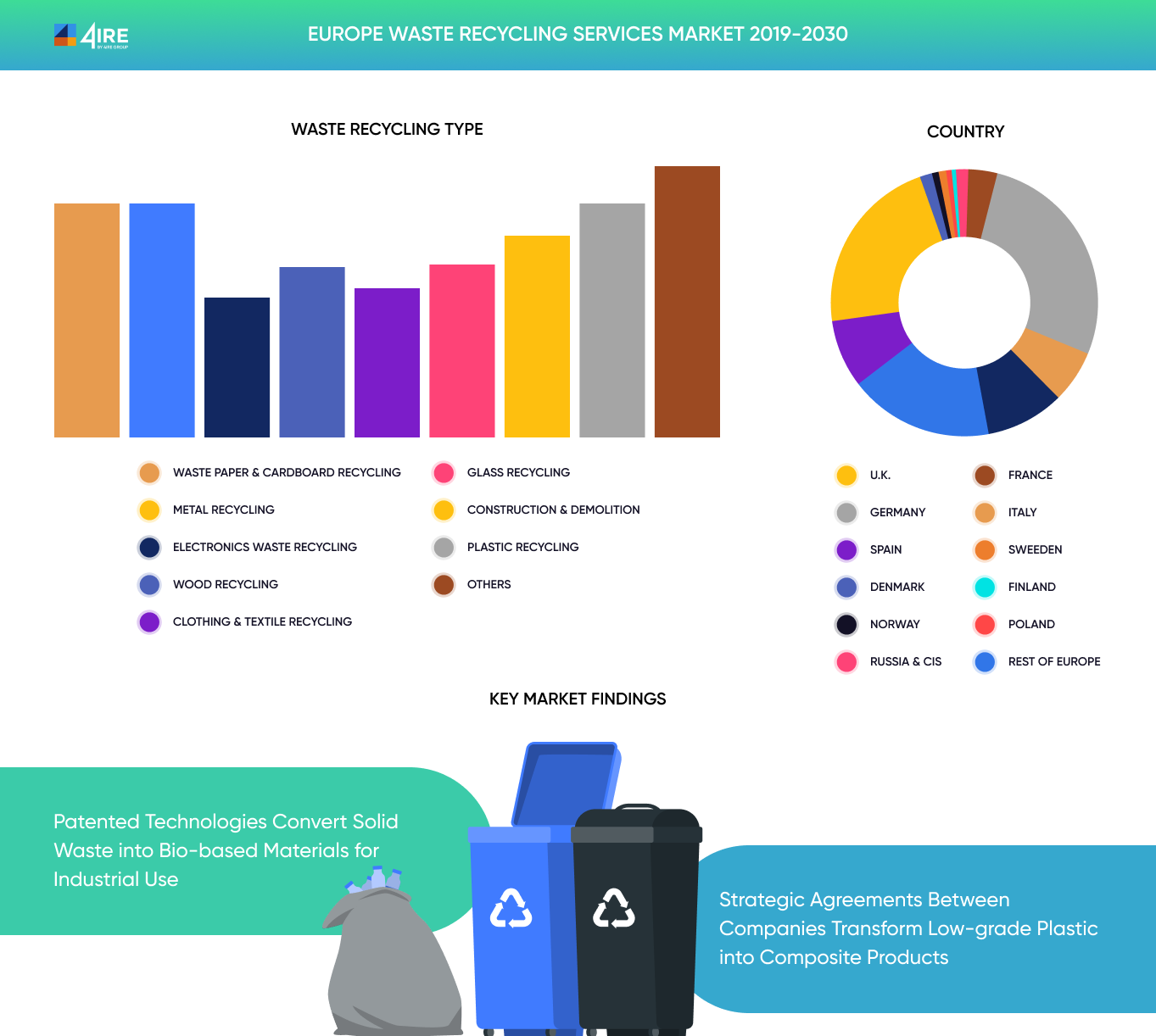
It can also contribute to achieving the goal of carbon footprint reduction by 45% by 2030, as stipulated in the landmark Paris Agreement. According to 2022 statistics, the international waste recycling services market cost $58 billion. It is projected to grow exponentially in the following decade.
As this industry develops, many innovative initiatives emerge. These include green finance trends and advanced recycling methods backed by credible research.
This article delves into circular economy initiatives, such as carbon markets. These allow businesses to participate more in climate change mitigation by purchasing carbon credits from recycling companies. In this way, they can compensate for their greenhouse gas emissions.
Thus, if you’re considering one of the recycling industry carbon credit options as your next business idea, this article will be highly helpful.
Here, we explain how your business can harness these opportunities to make operations more sustainable. This article may also be useful if you are considering expanding the operation of your waste recycling business to carbon credit marketplaces.
Benefits of Carbon Credit Platforms for the Recycling Industry
The functioning of carbon credit services is rather straightforward. They issue carbon credits, which are essentially permits allowing a company to generate a certain amount of carbon. One carbon credit typically corresponds to one metric ton of carbon dioxide. What makes carbon credits useful is that they can be traded with any company for their environmental purposes (e.g., a commitment to reduce greenhouse emissions), which is economically and environmentally beneficial for all parties involved.
Different types of companies can issue carbon credits. Here, we are focusing on recycling businesses engaged in sustainable waste management. These businesses can adopt eco-friendly waste management practices. For example, they can create green energy from waste recycling. This allows them to earn carbon credits and use them as tradeable commodities. Consequently, these credits need to be sold somehow. This is where trading platforms become essential.
Based on fact-checked, evidence-based research, we can outline the following key advantages of recycling-related carbon credit platforms:
Environmental Benefits
Scientific research shows that emission trading schemes can reduce carbon emissions, which are known to contribute to climate change. These schemes work for more direct emissions, such as those generated through the use of fossil fuels in production. However, they can also be useful for so-called scope three emissions. This concept concerns indirect CO2 emissions that the company does not directly control.
The success of carbon offset projects in the recycling sector encourages sustainable practices across different industries. This leads to the expansion of carbon neutrality policies. Research shows that the more businesses join this environmental best practice, the greater the impact can be achieved at the regional and country levels. With the growth of trading platforms, more and more companies can participate in credit selling and purchasing across borders.
Economic Benefits
Carbon credits are a proven revenue-generating method for companies issuing them. Waste recycling businesses, landfills, compost facilities, and other waste management companies can offer carbon credits as an additional source of income. This helps them expand and survive in this increasingly competitive industry.
Recycling companies are also incentivized to use more efficient, science-backed recycling processes to issue more carbon credits. Eventually, this approach helps generate more revenues, making these businesses more economically viable. Finally, the use of green practices for carbon credit production can attract more green investment. It can also open greater access to green loans.
Compliance and Reputation Benefits
We all want to believe that carbon credits are all about genuine commitment to environmental protection. In reality, they are also used for compliance and reputational purposes. For example, in the USA, strict laws and regulations control industrial greenhouse emissions. All companies registered there should comply with them. So, using recycling industry carbon offset solutions is a matter of survival.
In addition, purchasing carbon credits can enhance businesses’ corporate social responsibility (CSR) profiles. This is crucial for attracting investment, improving the overall image, and drawing more customers. Companies whose mission and vision involve greener, more sustainable operations are the main customers.
Issuing Carbon Credit Platforms in the Recycling Industry
Now, it’s time to discuss how waste sector carbon credit initiatives actually work in practice. If you operate a recycling business, these are the steps you need to take to benefit from this solution:
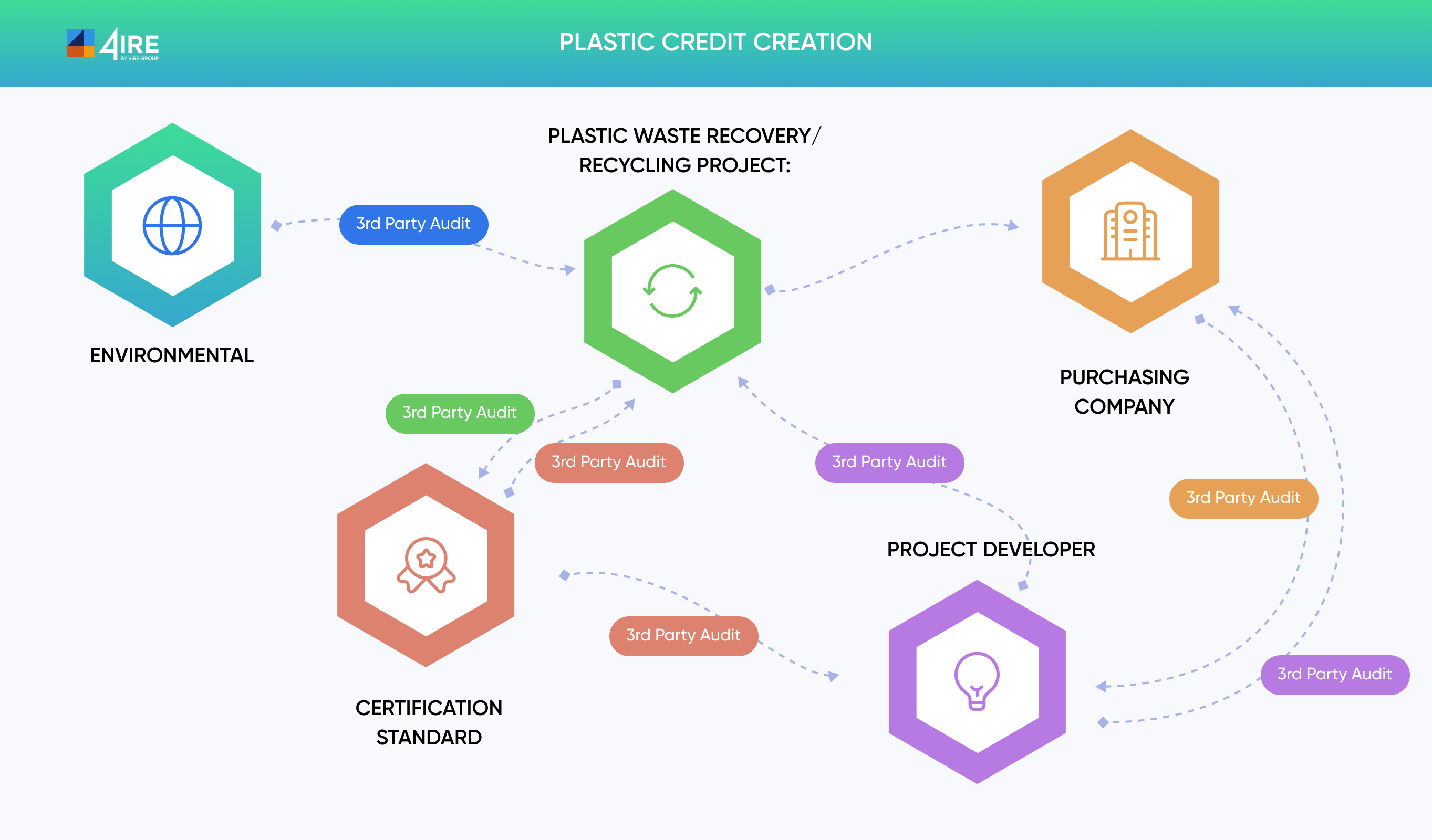
- Project registration. The first step is to register your recycling project with reputable carbon credit organizations. Verra or the Gold Standard are the most popular options.
- Validation and verification. Independent experts evaluate your project design and calculate emission reductions. In this way, they confirm that the credits you issue are actually credible and environmentally beneficial.
- Issuance of credits. Carbon credit issuing can start as soon as independent verification is obtained.
- Trading and monetization. The key to making this process economically successful is to use efficient carbon platforms. These link recycling businesses to companies looking to offset their emissions.
Success Stories from Recycling Companies
Still in doubt about whether your business can benefit from emission trading schemes? Here are a couple of success stories to convince you.
GreenTech
This Romanian polyethylene terephthalate (PET) recycling company is one of the leaders in the sustainable waste management market. Gold Standard recognized its impressive success in issuing almost half a million carbon credits. These amount to an annual reduction of 45,380 tons of CO2 over a decade.
CheckSammy
The waste recycling company CheckSammy is another example of successful waste management revenue diversification. It trades carbon credits through its own Carbon Offset Marketplace, enabling easier environmental compliance through streamlined online operations that take only a few clicks.
Carbonfund
It is a company engaged in numerous waste management projects related to renewable energy from landfill gas. Its credits are verified by the Verra carbon standard (formerly VCS) and Gold Standard, increasing its credibility among businesses looking to offset their emissions. It also pursues a transparent credit policy that targets any businesses considering the idea of greenhouse gas offsets.
Carbonfund is living evidence of the fact that the more comprehensive and clear the calculation of credit cost is, the more clients can be attracted. Carbonfund was once a not-for-profit organization, so its success in the carbon credit market demonstrates that this solution can be flexibly adopted by anyone willing to turn emission reduction into a profitable business.
To summarize, the companies mentioned above demonstrate that selling credits to businesses and individuals aiming to achieve net-zero emissions is a successful commercial approach that generates more revenues.
Measuring the Impact of Recycling Projects
Are you a recycling business aimed at increasing revenue through carbon credits? Then you need clear performance metrics to monitor progress. You can calculate the amount of recycled waste and the corresponding reduction in CO2 emissions. For example, a polymer recycling company may need to evaluate the amount of polymer objects that were diverted from the landfill into recycling and how this decreased the environmental footprint.
Valid methodologies like VM0011 by the Verified Carbon Standard (VCS) are some of the most popular ways to estimate greenhouse gas emission reductions and calculate carbon credits. By keeping track of these metrics, recycling businesses communicate their environmental advantages and gain the right to sell corresponding carbon credits.

Carbon Credit Market Size and Future Prospects
The carbon credit market comprises compliance and voluntary markets. Mandatory national, regional, and international carbon reduction regimes oversee the compliance market. In turn, a voluntary market helps companies move beyond their regulatory obligations. Companies can buy credits to improve their reputation. They can also align their practices with the stated environmental missions and values.
Market Size
Although calculations vary, the value of the global compliance market was estimated at $800 billion in 2023. Its compound annual growth rate is set at 14.7% in the following decade as more governments introduce stricter compliance measures to meet the ambitious targets set by the Paris Agreement.
Companies also use their own environmental impact assessment strategies. These allow them to set targets for voluntary CO2 reductions. As a result, the size of the voluntary carbon credit market reached $2.4 billion in 2023 and is projected to grow by 27% by 2032.
Recent Trends and Projections
Given increasing awareness about the damage caused by CO2 emissions and the increasing importance of environmental transparency in business operations, the future of both markets looks promising. The recycling industry can take advantage of the increasing demand for carbon credits. This will uncover valuable revenue streams and drive further investment in sustainable practices.
One emerging trend is the development of carbon credit platforms. Such platforms connect recycling businesses with companies looking to offset their emissions. For example, CBL Markets has joined this trend by launching an online marketplace for emissions trading. It is a secure platform where sellers and buyers of carbon credits can trade in real time.
Our expert analysis suggests that in the following decades, one can expect greater segmentation of this market based on credit issuers and end users. Carbon credit platforms are already valued at $110 million. They represent a competitive market where different companies can find a profitable niche.
Some countries, such as the United States, can be particularly attractive targets for carbon credit platforms. They boast impressive compliance and voluntary environmental commitments adopted by their companies. Recent research shows that thousands of American companies have joined initiatives such as the “Race to Zero” or the Science Based Targets initiative (SBTi) to become net zero. Achieving the targets set by these initiatives will require the use of carbon credits generated from carbon markets to offset corporate emissions. So, if you are looking for ways to increase the revenues of your recycling business, the timing is perfect.
Green Bonds: A Strategic Financial Tool for the Recycling Industry
While carbon credit platforms help recycling businesses monetize their carbon reduction efforts, green bonds offer another opportunity for these companies to secure funding for sustainability projects. These bonds provide access to capital specifically for sustainability initiatives, such as upgrading recycling facilities, producing green energy from waste, or researching more efficient recycling methods.
For recycling businesses, issuing green bonds presents an opportunity to fund large-scale, capital-intensive projects that align with their sustainability objectives. For instance, a company seeking to expand its facilities or integrate innovative technologies to further reduce its carbon footprint can leverage green bonds to access the necessary capital. This not only enhances the company’s operational efficiency and environmental impact but also positions it to generate additional carbon credits, thereby increasing its long-term profitability.
Integrating Green Bonds with carbon credit trading platforms could offer a powerful, dual financial approach to achieving environmental and economic goals. Recycling companies that invest in new technologies or infrastructure through Green Bonds may find that they can generate more carbon credits as their operations become even more environmentally friendly.
Building Your Own Carbon Credit Platform with 4IRE
If you are considering joining the carbon credit marketplaces for waste management companies, 4IRE can offer customer-focused carbon credit software development services. Years of experience in green finance helped us build expertise in creating innovative solutions for companies seeking to harness the green tech trend. Here’s the breakdown of what services we provide in this area:
- Carbon credit marketplace. Joining already existing carbon credit platforms is always an option. You can also directly connect with your potential customers. Our ready-to-go solution for carbon credit procurement, trading, and validation helps recycling businesses maximize profits.
- Carbon credit token issuance. Why not take advantage of blockchain solutions? Using our carbon credit tokenization technology might help. It transforms metric tons of CO2 into fungible, tradable assets. As a result, you can enjoy simplified and secure carbon credit management and trading.
- Carbon token implementation. Our mission is to help everyone tokenize their carbon credits through our expertly designed platform. You don’t need extensive technical expertise or in-depth blockchain knowledge. Generating more revenues through our solutions is easier with our help.
- Integration with secondary markets. Our industry-leading solution connects project owners with other projects in green finance within the blockchain ecosystem. As a result, you can accrue additional benefits by expanding the pool of potential customers and partners.
- Custody wallet integration. We use trustworthy Application Programming Interface (API) solutions to link crypto wallets to our carbon credit marketplace. This feature allows you to customizable wallet support options and diversify the ways to gain revenue.
We know that this information might seem too complex to someone outside of green finance. Do you have any questions about our services? Maybe you want to know how we can help your company go beyond zero-waste initiatives? Feel free to contact us for more details.
Conclusion
Leveraging the potential of carbon credit platforms is an emerging trend. It can help waste recycling companies amplify their positive impact on the environment. Boosting the revenues is an additional bonus. By registering and validating their carbon reduction practices, businesses can issue carbon credits. These credits work for anyone willing to offset their greenhouse emissions. They are a great way of engaging a greater number of people and companies in more sustainable practices.
As the market for carbon credits is expected to grow in the following decade, you can also take advantage of this trend. No matter what products/ materials you recycle or how big your company is, you can contribute to reducing carbon footprint through recycling.
FAQ
Any waste recycling company can earn income from the sale of carbon credits. To do so, it needs to register a carbon reduction project. Then, you need to perform scientific calculations proving the environmental benefit. Finally, you get official approval that authorizes the issue of carbon credits. By selling these credits, a company thus gains an additional source of revenue. It can be further invested in advancing technologies and expanding business operations.
Recycling companies are not automatically eligible for issuing carbon credits. To qualify for this practice, they need to adopt science-based waste management practices. Ideally, these should not only reduce emissions but also produce green energy for further consumption. In this way, recycling businesses minimize a negative effect on the environment. At the same time, they decrease the demand for fossil fuels. Eventually, renewable resource utilization can help achieve Paris Agreement goals.
There is a myth that carbon offset projects are only for large recycling companies. These tend to have significant technical and project management capacities. However, advanced technologies and expertise in this area have been growing. So, small and medium-sized companies can also join this fast-growing industry.
Make sure that the selected platform works for your business type and can connect you with the right customers. With this industry’s increasing segmentation, the optimal solution would be to create your own platform. It will help you meet your company’s unique needs.
The cost depends on the number of services you want to incorporate. The 4IRE team can help you hand-pick green finance technologies that you actually need to minimize the costs. You can request a breakdown of our services. We also provide user testimonials and expert consultation.
The process of developing, validating, and registering a recycling project that issues credits can take up to two years. So, it is understandable that companies need to find solutions that would link them to customers as soon as possible. With our help, you can get a platform that complies with all existing regulations. It can also be easily incorporated into your business operation.
We also offer products with a scalable architecture. This means that you can pursue seamless expansion without additional costs. Last but not least, we take pride in achieving high customer satisfaction by creating a user-friendly platform design, which will boost your competitiveness.
-

 Verified Expert in Blockchain
 - 16 Years of Experience


Similar articles
More articles