

Top Real Estate Tokenization Development Vendors in 2026
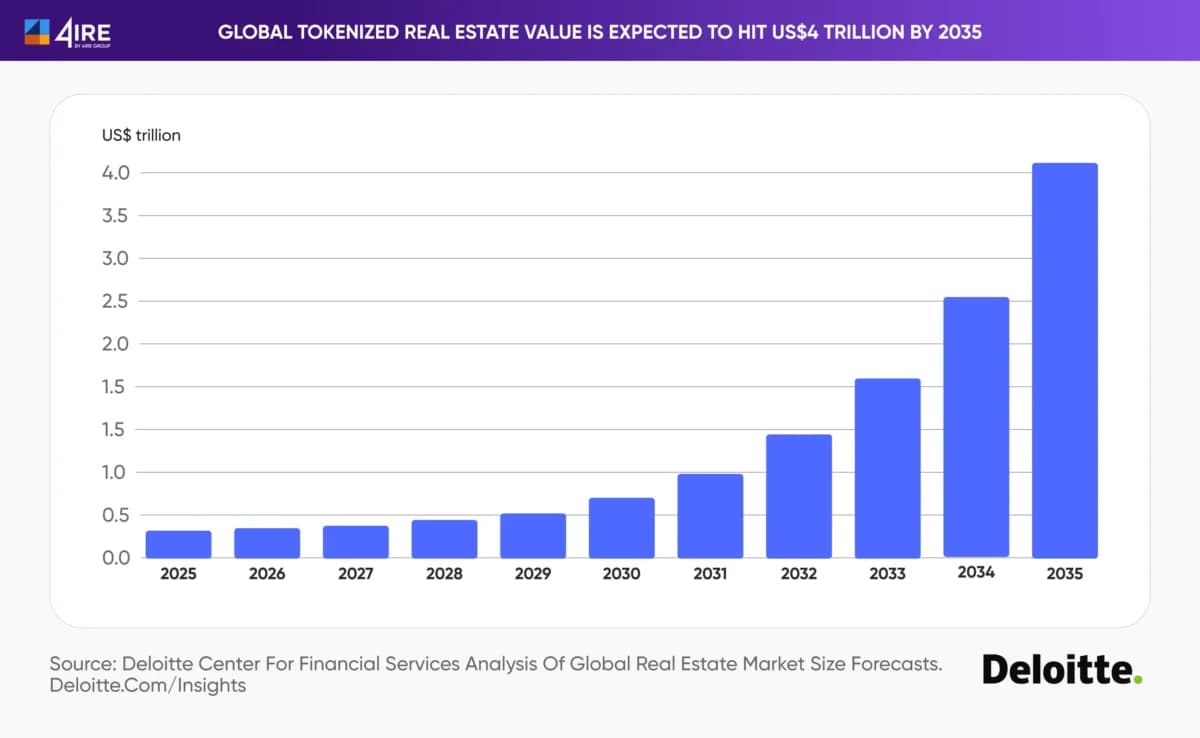
The tokenized real estate market is growing, with a global market cap of over $3.7 billion registered in 2025 and a CAGR of 21% observed in the field. If the tempo persists, the industry will account for almost $24 billion by 2035 – an immense market opportunity for any business to harness. Deloitte experts are even more optimistic, naming the figure of $1 trillion as a realistic market cap for tokenized private real estate funds by 2035.
What do these figures mean for your business? The main takeaway for any company dealing with real estate is that the time for real estate tokenization platform development is now. This article breaks down the regulatory landscape for such a project, lays out core industry trends and their business implications, and walks you through the principles of RWA tokenization partner selection, together with a list of the top 10 vendors worth your attention.
Global Regulatory Landscape in Real Estate Tokenization
Understanding jurisdiction-specific laws regulating RWA tokenization and real estate is key to choosing the right real estate tokenization solution. RWA-related regulation evolves, with many specific developments expected in 2026.
The European Union: MiCA & the Mid-2026 Deadline
The EU market for real estate and security token offerings is regulated by the Markets in Crypto-Assets (MiCA) regulation, introduced in late 2024 to start a transitional regime for crypto asset service providers. The law comes into full force on July 1, 2026, binding all firms and tokenization vendors with a comprehensive set of Regulatory Technical Standards (RTSs).
At present, real estate tokens belong to the utility token category under MiCA, which means that blockchain fractional ownership of digital assets doesn’t presuppose property ownership but entitles token holders to rights to services and economic benefits, like rental yield or energy infrastructure output. Investors also enjoy a 14-day withdrawal privilege under MiCA, meaning they can cancel their investments without penalties.
Overall, the EU fractional real estate tokenization market is regarded as one of the maturest across the globe, with its market cap approximating €2 trillion by 2028. Growth drivers include extensive RWA tokenization and integration of blockchain assets with CBDCs, predicted to accelerate in 2026. However, jurisdictional specifics limit the possibility of assigning legal ownership to RWA tokens, as many EU member states ban the digital transfer of property ownership and require notarized documentation for such transactions.
United Arab Emirates: VARA and ARVAs
Dubai is undoubtedly the most blockchain-friendly jurisdiction with an end-to-end institutional real estate tokenization ecosystem backed at the governmental level. The Virtual Assets Regulatory Authority (VARA) of Dubai introduced the new Asset-Referenced Virtual Assets (ARVA) classification for RWA tokens in May 2025, giving the tokenization industry transparency and investor clarity. Firms specializing in tokenization services or wishing to tokenize their real estate portfolios must receive a VARA crypto license in UAE for issuing ARVAs. Requirements for licensing typically include a whitepaper with token design, proof of reserves, risk assessment, and redemption rights modelled in compliance with Dubai law.
Besides regulating RWA tokenization projects, the Dubai authorities explore the benefits of real estate tokenization with their own initiatives. Phase Two of Dubai’s Real Estate Tokenization Project Pilot started in February 2026. It is a joint tokenized real estate UAE project by Ctrl Alt and the Dubai Land Department, which has opened access to ten tokenized real estate objects to investors via secondary market trading. Phase Two presupposes ARVA management token issuance to advance transfers in secondary market trading tokenized real estate. This way, regulatory reforms in Dubai bring the land registry itself on-chain to enable effective token circulation.
Singapore: Project Guardian & Institutional Liquidity
The main regulatory mechanism pertaining to RWA tokenization in Singapore to watch closely is the Monetary Authority of Singapore’s (MAS) Project Guardian. It came into force in 2025, moving RWA token circulation from a conceptual field to a practical area of commercial securities trading. The project enables digital asset transfers in Singapore, Japan, and Switzerland, thus offering a transparent, enforceable architecture for digital asset and wealth management via the Guardian Funds Framework (GFF) and foreign exchange.
The Guardian Composable Token Economy is a revolutionary move that has made composable digital asset tokenization possible. CBDC introduction in 2026 also drives this market’s development, with active pilot testing of the blockchain-based Singapore dollar CBDC exchanges and settlements underway. Yet, the digital token industry of Singapore is yet to resolve the challenge of interoperability.
United Kingdom: The Digital Securities Sandbox (DSS)
The DSS initiative of the UK’s Financial Market Infrastructure (FMI) is regulated by the Financial Services and Markets Act 2023. DSS oversees the issuance, trading, and settlement of blockchain-native financial instruments until 2028, offering relaxed regulatory constraints as a pilot test for new regulations. The first real estate tokenization business in the UK is CurveBlock; the project is a private-public partnership including the Bank of England and the Financial Conduct Authority. Lloyds also plans an asset tokenization rollout later in 2026, marking a new page of tokenization integration in the UK financial industry.
Top 5 Real Estate Tokenization Trends in 2026
RWA tokenization real estate is maturing, and 2026 is a turning point for the industry in many aspects. Here is a list of core trends shaping it today.
Hybrid Tokenization (RWA+DePIN Architecture)
The convergence of RWA tokenization with decentralized physical infrastructure networks (DePIN) is a structural revolution of 2026. This move manifests a departure from a classical approach to asset ownership to entitlement to its output. DePIN incentivizes people to contribute their physical resources in return for tokens with monetary value and exclusive infrastructural benefits. This principle is at the heart of rental yield tokenized assets and other formats: contributors become token owners with multi-stream yields. For instance, a tokenized wind farm or solar investment platform offers both the benefit of fractional ownership and a proportional share of the revenues it generates.
Secondary Market Liquidity Depth
Real estate tokens, as well as many other RWA assets, have long been troubled by the secondary market liquidity problem. In other words, they could be bought and held, but demand for their trading was scarce. Things are changing in 2026, with rental streams and new markets for real estate tokens driving demand upwards. As soon as tokens turn into a regulated on-chain instrument, their value and investment properties become identical to REITs, thus giving them secondary liquidity. Platforms that already welcome real estate token trading include ADDX, Archax, and J.P. Morgan’s Tokenized Collateral Network.
AI-Driven Compliance (RegTech)
Compliance automation holds promise for the real estate tokenization industry, as it ensures safe operations facilitated by agentic AI. These innovations may improve AML systems currently troubled by massive false positives alerts and transform the KYC, fraud detection, and transaction screening processes in terms of accuracy and speed. A promising innovation is the AI-driven platform AiPrise for KYB procedures, with many other projects implementing explainable outputs and auditable decision engines underway.
ESG-Linked Tokens
Green-yield tokens represent green tokenized real estate – environmentally certified buildings brought on-chain. Verified compliance with sustainability standards (e.g., LEED, BREEAM, and BCA Green Mark) gives clear investment benefits for institutional funds required to demonstrate ESG-aligned portfolios. These tokens enjoy high demand in the token asset market because they come with tax incentives under MiCA and serve anti-greenwashing goals.
How to Choose a Real Estate Tokenization Partner in 2026: Mandatory Vendor Expertise
After studying the complete guide to RWA tokenization benefits, you’re probably ready to launch your own project. Working with the best real estate tokenization companies 2026 is your sure bet for success in the RWA industry.
Multi-Chain Interoperability
Only top real estate tokenization companies can create a genuinely “chain-agnostic” solution for your RWA platform. The emerging industry standard is the fusion of Ethereum and Ethereum Layer 2 solutions for base infrastructure, coupled with cross-chain messaging protocols like Chainlink CCIP and LayerZero. This combination ensures secure and compliant smart contract interoperability.
Legal Engineering & Smart Contract Wrappers
The greatest confusion in the blockchain world is the concept of a smart contract, which is not a contract in technical terms. Smart contracts represent pieces of self-executing code that activate once pre-configured conditions are met. Yet, they have no legal force and can’t be used as proof of legal title, with an enforceable legal structure needed for these purposes.
Blockchain developers have created Ricardian Contracts to address this challenge. These documents are understandable to humans and computer systems, containing legally binding claims on property tied to an asset transaction. To create such contracts, your technology partner should have a team of legal engineers who know jurisdiction-specific nuances and can adjust contracts to your jurisdiction of interest via customizable wrappers.
Oracle Reliability & On-Chain Valuation
Digital assets representing real estate property are traded on crypto exchanges 24/7, and their price should always be sensitively fine-tuned to the factual price of the property they represent. This connection is guaranteed with oracles, specialized services responsible for real-time data matching for off-chain and on-chain assets. The Chainlink Runtime Environment is an excellent example of real-time proper valuation orchestration and price cross-checking. On-chain valuation using the Proof of Reserve feed before minting new tokens also helps verify collateralization and avoid over-minting.
How We Evaluated and Ranked the Top Tokenization Companies in 2026
To give you clarity amid the competitive market of RWA tokenization offers, the 4IRE team has applied a transparent ranking methodology, singling out market leaders worth your consideration. We’ve scanned property tokenization companies against the following criteria:
- Compliance strength (focused on U.S. and UAE regulatory support)
- Tokenized AUM/project volume
- Liquidity features
- Minimal investment threshold
- Core tech capabilities
- Implementation speed
- Clients’ results
- Support quality
The outcome of extensive evaluation and comparison is presented below, with a structured presentation of 10 tokenized real estate companies delivering best-in-class services relevant to present-day business needs.
#1 4IRE
Year founded: 2010
Employees: 50-200
Domains: Blockchain development, FinTech, DeFi, GreenFi, RWA tokenization
Location: Kyiv (Ukraine), Stockholm (Sweden), Tallinn (Estonia), London (UK), Warsaw (Poland)
Clients: Danske Bank, Basis Bank, SEB Bank, ARGO (gold trading platform)
RWA services/solutions: White-label RWA tokenization platform; modular smart contract development; carbon credit marketplace; multi-chain support (Ethereum, Solana, Polkadot, NEAR, Sui, Aptos, Corda).
4IRE has extensive expertise in the field of real estate tokenization, partnering with BitRent on a security audit in 2018 and contributing to the development of the SeaSide marketplace, a project with tiered NFT membership systems linked to real estate ownership. The company stands out as a reliable B2B infrastructure solution provider with full IP ownership of RWA tokenization products granted to its institutional clients. The 4IRE RWA platform comes with no SaaS-type lock-in, ensuring asset sovereignty and security required for Tier-1developers. Modular architecture and multi-jurisdictional core of the 4IRE solution simplify and speed up proprietary RWA ecosystem design and deployment in line with the industry’s top standards. The company also provides enterprise-level custom asset tokenization platform development services to help businesses create and launch branded software from scratch.
#2 Polymath
Year founded: 2017
Employees: 50
Domains: Security token issuance, RWA capital markets, regulated digital securities
Location: Toronto, Ontario (Canada)
Clients: RedSwan, Marketlend, tZERO, REtokens, CycleX
RWA services/solutions: Token Studio (ERC-1400 / ST-20 security token standard); Capital SaaS platform for token issuance on Polymesh; investor onboarding solutions; KYC/AML; transfer agent services.
Polymath is a Canadian platform bridging financial securities and blockchain. Its Polymesh-powered Token Studio and Capital SaaS products enable issuance and trading of security tokens, with the ERC-1400 tokens equipped with built-in regulatory compliance tools. Investors and asset managers appreciate Polymath’s regulated end-to-end tokenization infrastructure.
#3 Zoniqx
Year founded: 2019
Employees: 20+
Domains: RWA infrastructure (TPaaS), multi-chain asset tokenization, AI-driven compliance solutions, institutional-grade DeFi.
Location: Menlo Park/ Santa Clara (USA)
Clients: Aurum Equity Partners, SurancePlus, StegX, T-Blocks, ZIGChain, Aasthi (Gift City)
RWA services/solutions: Tokenized Asset Lifecycle Management (TALM); DyCIST / ERC-7518 multi-chain protocol; zProtocol, zCompliance (AI-powered), zConnect, zPay, zIdentity; RWA Connect liquidity network.
Zoniqx is a brainchild of Silicon Valley engineers. This RWA infrastructure platform allows property tokenization via its Tokenized Asset Lifecycle Management (TALM) system running on the company’s proprietary DyCIST (ERC-7518) multi-chain protocol. This vendor’s benefits include AI-driven compliance tools and seamless cross-chain interoperability for Ethereum L2, XRPL, Hedera, and private chains.
#4 Polymesh
Year founded: 2021
Employees: 30-50
Domains: institutional blockchain infrastructure, regulated asset tokenization, security token blockchain
Location: Zug (Switzerland)
Clients: DigiShares, ABC Tokens, BitGo, Zodia Custody, BDACS, Black Manta Capital
RWA services/solutions: Purpose-built permissioned L1 blockchain for RWAs; on-chain identity & KYC; on-chain governance; flexible asset custody; confidential asset transfers; API-first architecture.
Polymesh represents a purpose-built permissioned L1 blockchain meant for the minting and circulation of regulated RWAs. It embeds all special-purpose tools like identity verification, compliance, and multi-party settlement mechanisms at the protocol level, thus eliminating smart contract overheads. The blockchain works with BitGo and Zodia Custody to provide institutional-grade asset custody. This vendor is known for on-chain title records and confidential asset transfers.
#5 RealT
Year founded: 2019
Employees: 70+
Domains: Fractional real estate tokenization, yield-bearing RWA, DeFi integration services
Location: Boca Raton, Florida (USA)
Clients: Mt Pelerin, Aavem Roofstock
RWA services/solutions: Tokenized fractional ownership of U.S. residential rental properties; daily stablecoin dividend distribution via smart contracts; RealT Money Market (RMM) DeFi lending protocol; Yet Another Market (YAM) secondary trading; Gnosis Chain & Ethereum support.
This pioneering U.S. fractional ownership estate platform gives access to American tokenized rental properties to investors from all corners of the globe, with an entry threshold of only $50. Tokenized property is owned by Wyoming LLC, with tokens deployed on Ethereum and Gnosis Chain. Rental income is distributed to owners every day, with tokens operating as collateral in the RealT Money Market (RMM) lending protocol.
#6 Consensys
Year founded: 2014
Employees: 500-700
Domains: Ethereum infrastructure, Web3 development, enterprise blockchain, DeFi tooling
Location: Fort Worth, TX (USA), global offices in Dublin, Paris, Singapore, Sydney
Clients: JPMorgan, Ernst & Young, BNP Paribas, Societe Generale, HSBC
RWA services/solutions: Web3 wallet gateway (MetaMask), Infura blockchain node infrastructure, L2 scaling for Linea zkEVM, Codefi tokenization suite.
Consensys is the infrastructure provider of MetaMask and Infura and an enabler of Codefi and Linea zkEVM L2 networks. It provides comprehensive smart contract auditing services via Diligence and also has an enterprise-grade Quorum blockchain, originally built for JPMorgan. The company’s tech solutions have become foundational for several large-scale tokenization projects, and despite the absence of direct engagement with real estate tokenization, Consensys offers a wide suite of developer tools and compliance software.
#7 Securitize
Year founded: 2017
Employees: 200+
Domains: Digital securities issuance, SEC-registered transfer agent, institutional RWA tokenization
Location: San Francisco, CA (USA), with offices in New York, Miami, Madrid, Buenos Aires, Tokyo, and Tel Aviv.
Clients: BlackRock (BUIDL fund, $2B+ AUM), KKR, Hamilton Lane, Franklin Templeton, Arca, Banco Santander, BC Partners, Apollo
RWA services/solutions: End-to-end tokenized securities platform; SEC-registered transfer agent & ATS; DS Protocol; Securitize ID (for KYC/AML); tokenized funds (BUIDL, Arca U.S. Treasury); secondary market trading via Securitize Markets.
Securitize is one of the few SEC-registered transfer agents and licensed RWA tokenization platforms. It operates the Alternative Trading System and provides a full suite for token issuance, KYC/AML checks, onboarding, secondary market trading, and dividend allocation. The company is behind BlackRock’s BUIDL fund. Besides this audacious partnership, the company provides institutional-grade token issuance services to Hamilton Lane and KKR.
#8 Fireblocks
Year founded: 2018
Employees: 900+
Domains: Digital asset custody & security, tokenization infrastructure, institutional DeFi, stablecoin issuance
Location: New York (USA), Tel Aviv (Israel), London (UK), Singapore, Hong Kong
Clients: Revolut, Crypto.com, ABN AMRO, BNY Mellon, Deutsche Bank, Goldman Sachs, ANZ Bank.
RWA services/solutions: MPC-based institutional custody, tokenization engine, wallet-as-a-service APIs, Fireblocks network, tokenization SDK, Canton Network integration.
Fireblocks is a US-based company working with over 1,500 clients, including big names like Revolut and Deutsche Bank. Its RWA tokenization platform handles the full cycle, from token minting to smart contract management and income distribution.
#9 Binaryx
Year founded: 2019
Employees: 20-50
Domains: retail fractional real estate tokenization, DAO LLC ownership, DeFi yield, white-label platform.
Location: Tallinn (Estonia), Sheridan (USA) for Binaryz Protocol DAO LLC
Clients: IN1, DWF Labs, property developers in Bali, the UAE, and the USA
RWA services/solutions: Fractional real estate investment from $50; Wyoming DAO LLC legal structure for direct token ownership; smart contract-automated rental income distribution; secondary market trading; white-label tokenization solutions for real estate brokers.
Binaryx is an Estonian company focusing on the retail real estate tokenization market segment. It allows international property investments starting from $50, with token ownership linked to real fractional ownership rights. Investors enjoy rental yields of up to 22% APR and can easily exit investment projects via secondary market trading. The company also offers white-label RWA tokenization solutions to real estate brokers and developers, with a wide client base in the UAE and U.S. markets.
#10 Brickken
Year founded: 2020
Employees: 30
Domains: Institutional RWA Tokenization (SaaS), Security Token Offerings, No-Code Tokenization, White-Label Solutions
Location: Barcelona (Spain)
Clients: BNB Chain (official tokenization partner); PwC Scale Tokenization Program participant; European Blockchain Sandbox; Chainlink BUILD Program; Keyrock Accelerate; Credefi; Assetera
RWA services/solutions: No-code Token Suite SaaS (multi-tenant architecture); white-label & API solutions for banks and asset managers; KYC/AML onboarding automation; BKN utility token; $300M+ in tokenized assets; multi-chain (Ethereum, Polygon, BNB Chain, Base) solutions; EU regulatory sandbox participant
Brickken is an institutional SaaS platform enabling RWA tokenization, including real estate, without tech expertise. Its branded Token Suite handles the entire tokenization workflow, from creation to KYC/AML and STO management. Investor onboarding and dividend allocation processes are also automated and fully configurable. The company has tokenized assets with a total value exceeding $300+ million and has established a wide partnership network, including BNB Chain and PwC.
Bespoke White-Label Ecosystems: Why Global Developers Choose Sovereign Infrastructure
Companies entering the property tokenization market increasingly opt for tech solutions that guarantee asset sovereignty: full IP ownership or private infrastructure. The benefit of working on shared tokenized property marketplaces is speed, but only a proprietary ecosystem comes with regulatory isolation and branding control needed for Tier-1 real estate developers with multi-billion-dollar portfolios.
The process of white-label RWA marketplace development starts with customization and feature selection suited to business goals and contingent requirements. 4IRE’s RWA marketplace solution is equipped with dozens of production-ready modules that save clients 12+ months of software development.
Next comes the asset tokenization development capability, which allows seamless customization of the ERC-7518 smart contract layer for specific regulatory requirements and formats, such as the UAE’s VARA standard.
Exemplar asset control and risk isolation, both vital elements of multi-billion-dollar portfolio migration to blockchain, are carefully planned and supervised via continuous enterprise blockchain consulting from the industry’s leading experts. RWA tokenization consultants are your primary touchpoints on the path to a functional, safe institutional-grade infrastructure. If you prefer an independent start in the RWA tokenization field, use our step-by-step guide to launching your own investment platform.
FAQ on Real Estate Tokenization Companies in 2026
PoR is an auditable, cryptographic proof of the project’s ownership of assets it offers for sale in the form of digital tokens. The rule of 1:1 backing of RWA tokens with off-chain assets is a must in many jurisdictions. It nurtures investor trust, ensures transparency, and mitigates stakeholder risks.
The MiCA regulation, fully operational since the middle of 2026, will classify more real estate tokens as asset-referred tokens, with robust Proof of Reserve demands and quarterly audits. After July 1, 2026, all platforms working under domestic regulations will have to validate MiCA compliance to avoid blockage in the EU market.
The principle of legal engineering gains traction in the development of blockchain real estate investment platforms. This approach prioritizes regulation as the starting point of platform design, so Ricardian smart contracts are the new normal in the RWA tokenization market. They hold legally binding force across jurisdictions and ensure compliance for operations with tokenized real world assets across borders.