


Blockchain's pitch to the gaming industry hasn't changed since it first showed up in 2017: let players truly own what they earn, instead of renting it from a studio's database. What's changed is who's building on that pitch. Ubisoft and NetMarble now ship titles on Immutable, which counts more than 700 games on its platform as of late September 2026. Ronin, the chain built for Axie Infinity, reports $14.44 billion in all-time DEX volume and $4.3 billion in all-time NFT volume. This isn't a niche experiment anymore. It's infrastructure a growing slice of the industry treats as normal.
Here's what blockchain actually changes for gaming, for both studios and players, and where the technology still falls short.
Why Gaming and Blockchain Fit Together
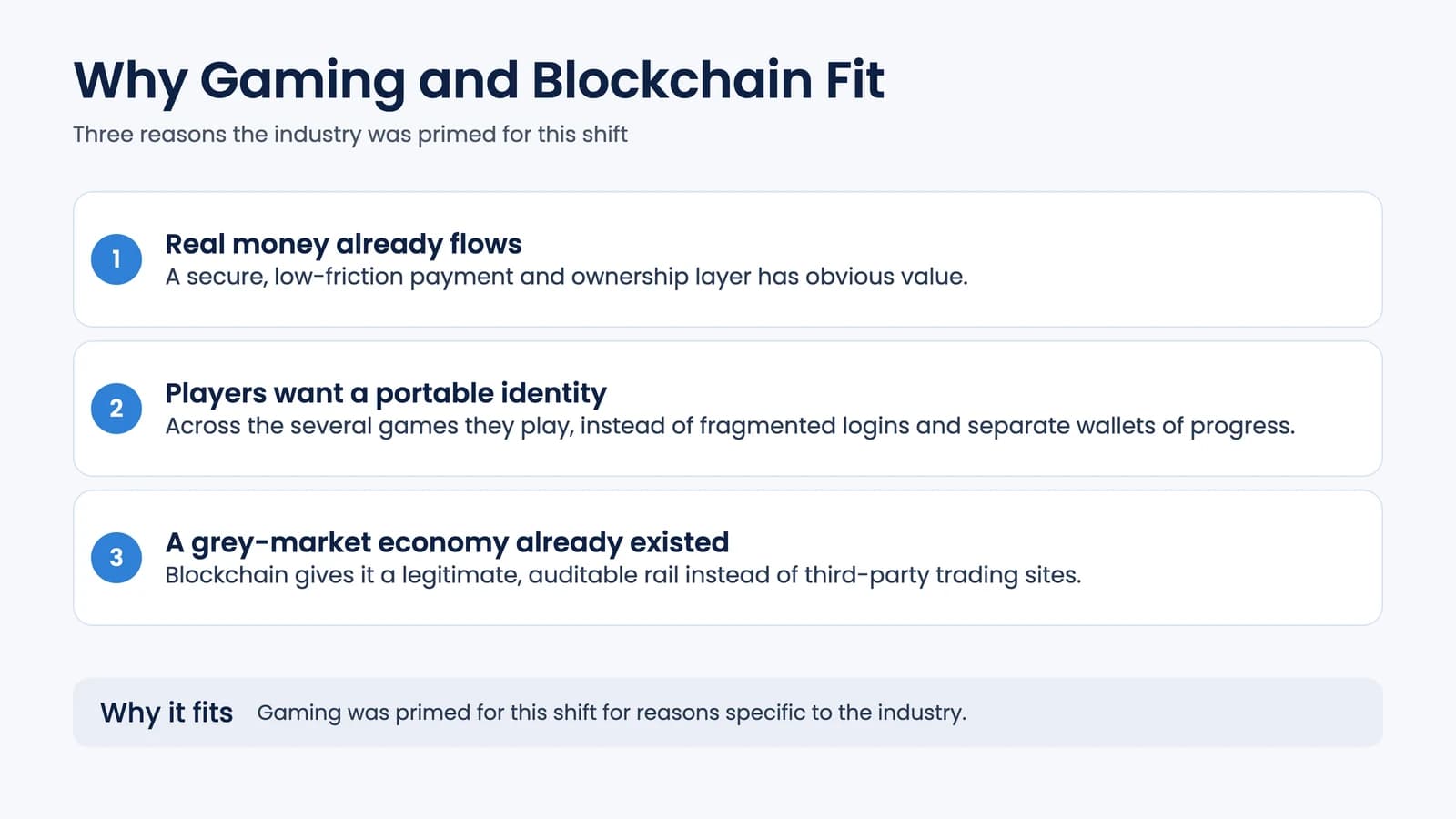
Gaming was primed for this shift for reasons specific to the industry: players already spend real money on virtual assets, they play across multiple titles and want a consistent identity, and a large secondary market for skins, items, and accounts already existed (informally, and usually against a game's terms of service) long before blockchain gave it a legitimate rail to run on.
- Real money already flows through in-game purchases, so a secure, low-friction payment and ownership layer has obvious value.
- Players want a portable identity across the several games they typically play, rather than fragmented logins and separate wallets of progress.
- A grey-market secondary economy already existed for skins and rare items; blockchain gives that economy a legitimate, auditable rail instead of pushing it to third-party trading sites.
What Blockchain Actually Changes
True asset ownership
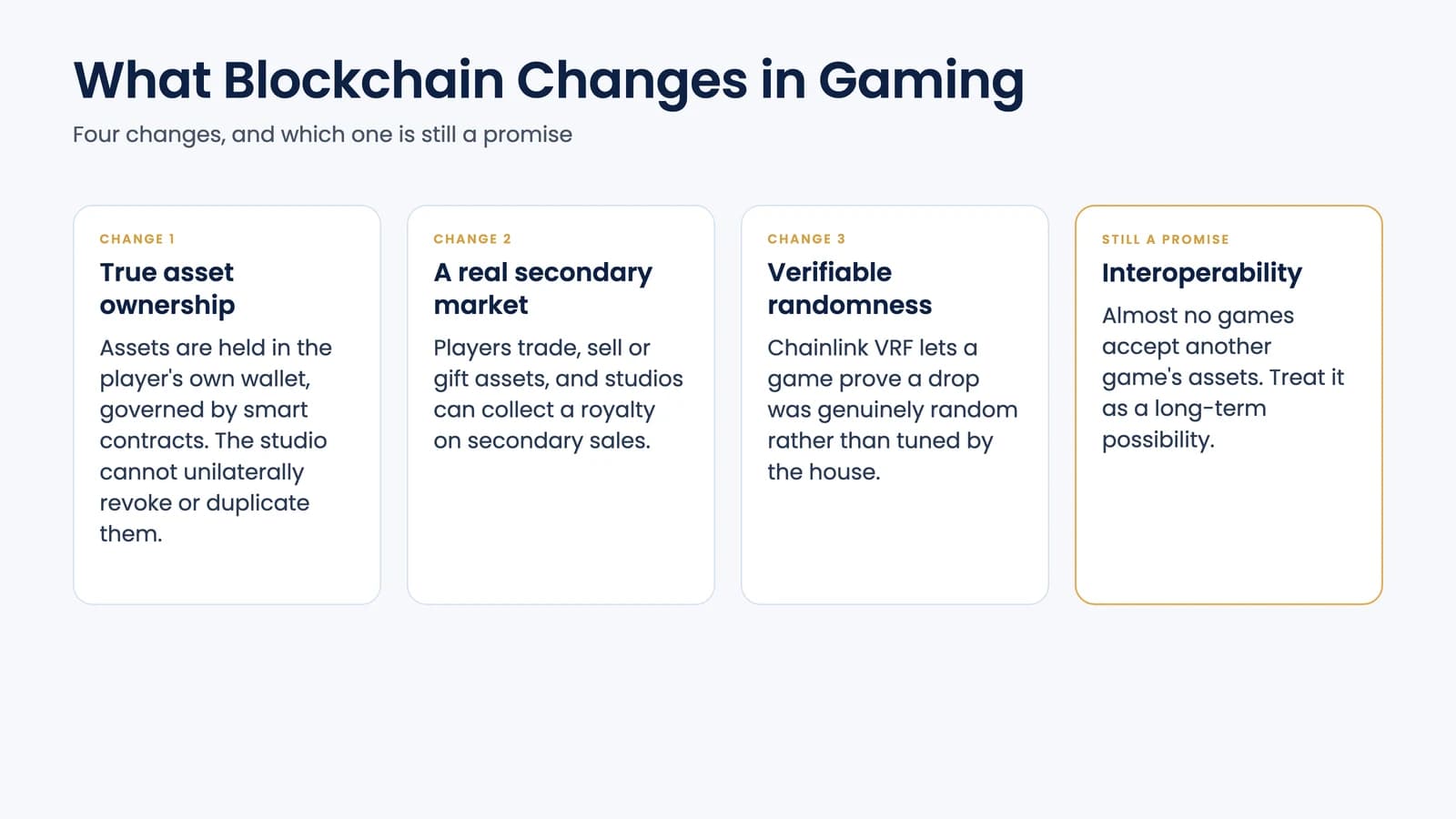
In a traditional game, your inventory is a row in the studio's database. If the game shuts down, so does your inventory. On-chain assets are minted as NFTs or tokens, governed by smart contracts rather than a private backend, and held in a player's own wallet. The studio can't unilaterally revoke or duplicate them, and in principle the asset can outlive the game itself, though in practice a dead game's tokens usually lose most of their value once nobody's playing. Items that need to evolve over time (a weapon that levels up, a creature that ages) are a specific category called dynamic NFTs, which update their own metadata in response to gameplay or real-world data.
A real secondary market
Players can trade, sell, or gift assets on an NFT marketplace without going through a studio-run storefront, and studios can collect a royalty on secondary sales, a revenue stream that doesn't exist in traditional game economies. NBA Top Shot, one of the earliest mainstream sports-collectible NFT products, is still tradeable on OpenSea years after its 2021 peak, even with today's activity far below launch-era levels, a useful reminder that these secondary markets persist long after the hype cycle, just at a smaller scale.
Verifiable randomness and fairness
Loot drops, matchmaking, and card draws are exactly the kind of "trust us" mechanic blockchain is built to remove. Chainlink VRF, an oracle service for verifiable random numbers, is explicitly built for blockchain games and NFTs. It lets a game prove a drop was genuinely random rather than tuned by the house, which matters most in games with real economic stakes attached to the outcome.
Interoperability: still mostly a promise
The idea that an item earned in one game could be used in another is the most-hyped and least-realized part of the pitch. In practice, almost no games actually accept another game's assets: the technical standard exists, but the game-design and business incentives to support it mostly don't. Treat interoperability as a long-term possibility, not a feature you can promise players today.
From collectible hype to game economies
The broader NFT collectibles market also shrank more than gaming did. CoinGecko puts the entire NFT market's capitalization at roughly $2.1 billion as of late September 2026, smaller than gaming tokens alone ($3.9 billion). That's a real shift from 2021, when speculative profile-picture and art NFTs dwarfed gaming activity. What's left of the NFT-adjacent market today skews toward tokens tied to an actual product (a game, a protocol, a utility) rather than static collectible art bought purely for resale.
Case Study: Building a Blockchain Game With 4IRE
4IRE has direct experience shipping blockchain games, including Blackchain, a play-to-earn NFT title that reduced time to market to 5 months for a Greece-based client. The pattern that made it work is the same one that separates every durable blockchain game from a failed token farm: build a game people want to play first, and treat the token economy as a layer on top, not the whole pitch. For a full walkthrough of that process, see our guide on how to build a blockchain game.
Where Blockchain Gaming Still Struggles
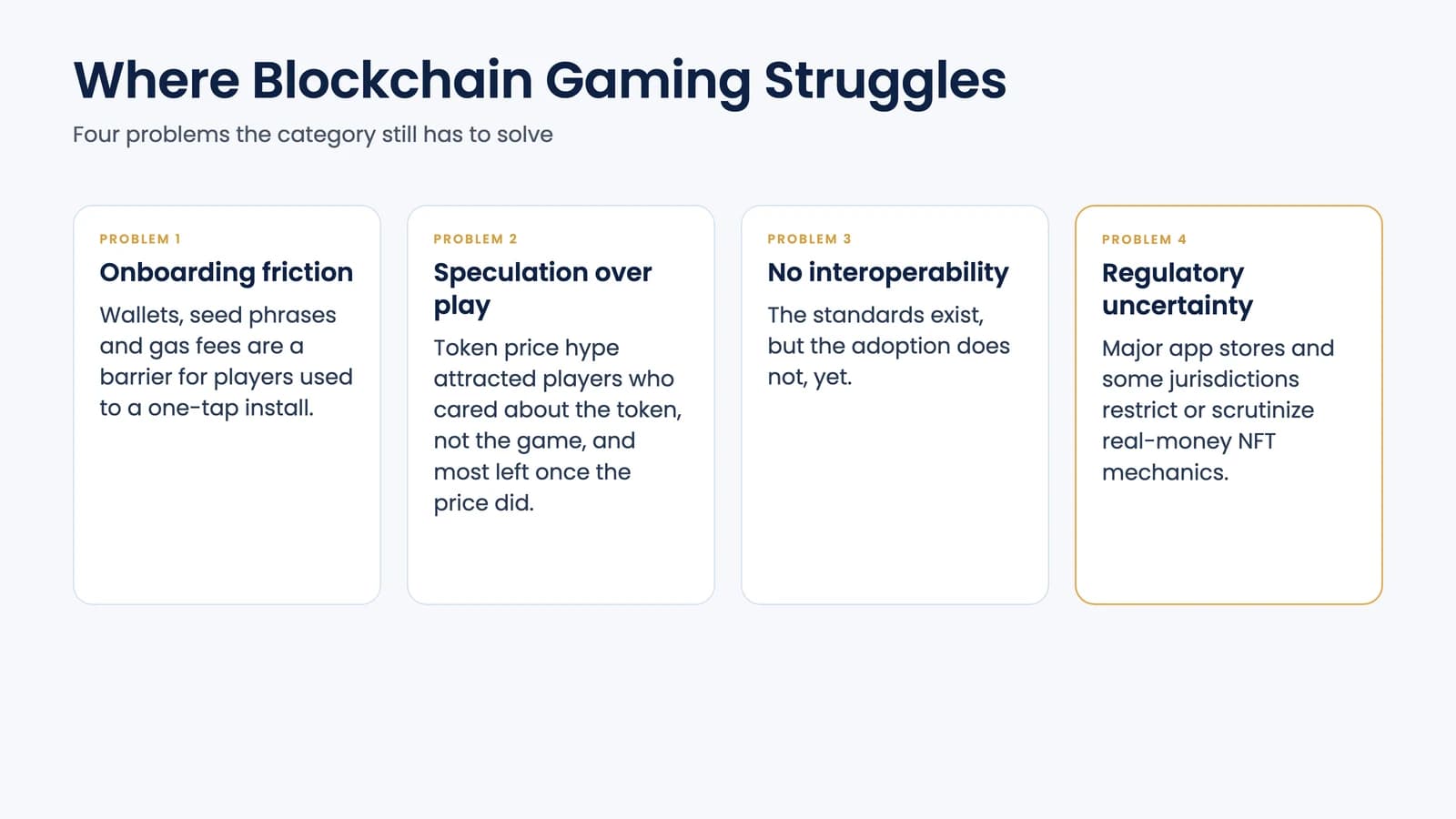
- Onboarding friction. Wallets, seed phrases, and gas fees are still a real barrier for players used to a one-tap app-store install.
- Speculative attention crowds out gameplay. Axie Infinity's AXS token trades roughly 99.3% below its 2021 all-time high as of late September 2026 (per CoinGecko), a reminder that token price hype attracted players who cared about the token, not the game, and most of them left once the price did.
- Interoperability remains largely unrealized. As above, the standards exist, the adoption doesn't, yet.
- Regulatory and platform uncertainty. Major app stores and some jurisdictions still restrict or scrutinize real-money NFT mechanics, which shapes what a studio can ship and where.
What's Next for Blockchain in Gaming
The realistic trajectory looks less like every game going on-chain and more like blockchain becoming an optional layer studios reach for when ownership and a real secondary market genuinely serve the game: asset-collecting and trading games, competitive titles with valuable cosmetics, and games built around a player-owned economy from day one. Traditional studios experimenting cautiously (Ubisoft, NetMarble) is a healthier sign for the category's future than another speculative token launch would be. For a closer look at who's actually playing these games today, see our GameFi audience report.
How 4IRE Can Help
If you're evaluating whether blockchain makes sense for your game, 4IRE's NFT game development team can help you scope it honestly, including telling you when it doesn't. See our breakdown of play-to-earn game development costs if you're ready to start budgeting.
Learn more from us
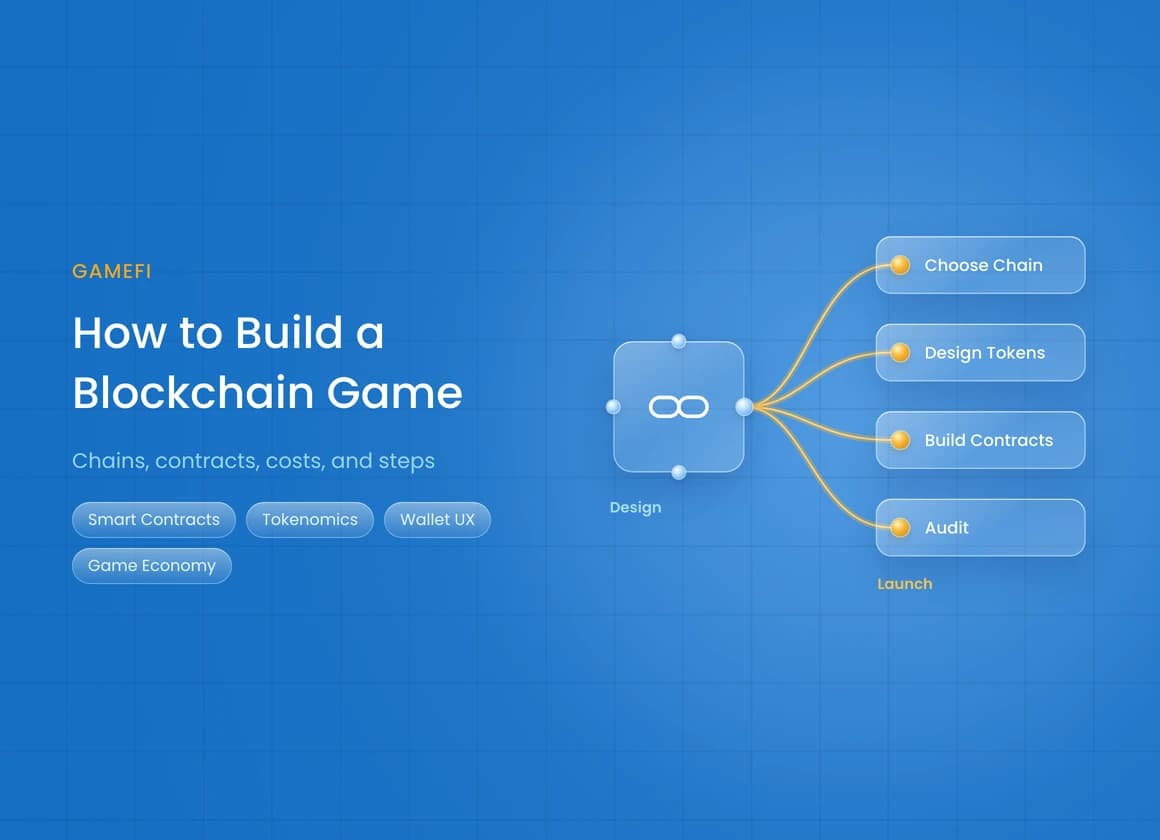 01 Oct 2026
How to Build a Blockchain Game: A Step-by-Step Guide
Learn how to build a blockchain game in 2026: choosing a chain, smart contracts, tokenomics, realistic costs, and 4IRE's step-by-step process.
Olena Petrashchuk
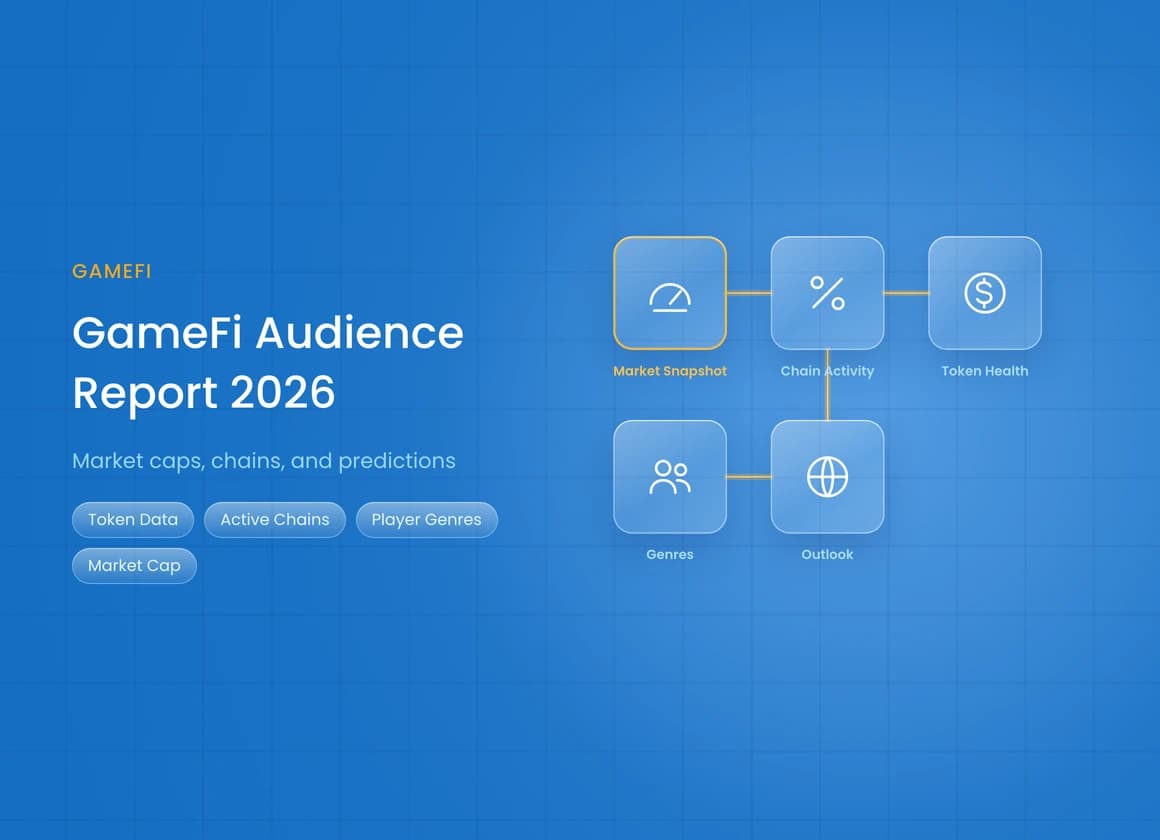 01 Oct 2026
GameFi Audience Report: 2026 Data and Predictions
A data-grounded look at GameFi in 2026: token market caps, chain-level activity on Ronin and Immutable, and what's actually driving adoption.
Slava Malchenko
 13 Jun 2022
Launching Your NFT Marketplace for Play-2-Earn Games
How to build an NFT marketplace for a P2E game: tech stack, wallet and storage choices, dynamic NFTs, and 4IRE's white-label vs custom cost.
Olena Petrashchuk
Considering Blockchain for Your Game?
Our team can help you evaluate whether blockchain genuinely fits your game -- and build it if it does. Book a call with our senior expert.
Frequently asked questions
Blockchain lets players truly own in-game assets as tokens in their own wallet instead of rows in a studio database, enables a legitimate secondary market with studio royalties on resales, and can make mechanics like loot drops verifiably random via oracle services like Chainlink VRF. It doesn't change core gameplay design -- a blockchain game still has to be a good game first.
Yes, but more soberly than during the 2021 peak. Gaming tokens tracked by CoinGecko carry a combined market capitalization of roughly $3.9 billion, and traditional studios like Ubisoft and NetMarble now build on blockchain infrastructure like Immutable. Most individual token prices, including Axie Infinity's AXS, remain far below their 2021 highs even as the underlying games keep operating.
Technically the token standards allow for it, but in practice almost no games currently accept another game's assets. Interoperability remains one of blockchain gaming's most-promised, least-delivered features -- treat it as a long-term possibility rather than a current capability.