


An initial DEX offering (IDO) lets a project list its token directly on a decentralized exchange, using the DEX's existing liquidity and user base instead of running fundraising on its own. It emerged as investors grew wary of initial coin offerings, where the project itself controlled marketing, screening and token distribution with no independent check.
This guide walks through what an IDO is, how it differs from an ICO or IEO, and the steps a founder needs to take to prepare a token for an IDO launch in 2026, including the regulatory groundwork that a 2021-era guide would not have mentioned.
What Is an IDO?
An IDO is a token launch conducted through a decentralized exchange or launchpad rather than a centralized exchange (IEO) or the project's own website (ICO). The DEX or launchpad screens the project, hosts the sale, and, because it already has liquidity pools and a user base, lists the token for trading almost immediately after the sale closes.
In exchange for that reach, the project typically shares a fee or allocates tokens to the launchpad. The launchpad's own reputation is what investors are trusting, since most IDOs still involve no KYC/AML checks and no third-party custody of funds.
IDO vs. ICO vs. IEO
| ICO | IEO | IDO | |
| Where it's sold | Project's own website | Centralized exchange (CEX) | Decentralized exchange / launchpad |
| Who screens the project | No independent screener | The exchange | The launchpad or DEX |
| KYC/AML | Varies by project | Usually required by the exchange | Often none, unless the launchpad adds it |
| Listing after sale | Not automatic | Not automatic | Near-immediate, using the DEX's liquidity pool |
| Typical fees | None to buy; exchange fees once listed | Exchange listing and trading fees | Gas fees only, paid to the chain |
How an IDO Works
A typical IDO follows the same sequence regardless of launchpad:
- The project applies to a DEX or launchpad and undergoes a vetting review against the platform's quality and safety criteria.
- Tokens are supplied to the launchpad at a fixed presale price, sometimes with funds locked for a set period until the Token Generation Event (TGE).
- Investors apply for an allocation; some launchpads use a lottery, others a tiered system based on how many of the launchpad's own tokens an investor holds.
- At TGE, tokens are distributed and become tradable on the DEX immediately, usually against a liquidity pool the project or launchpad seeded in advance.
Steps to Launch an IDO
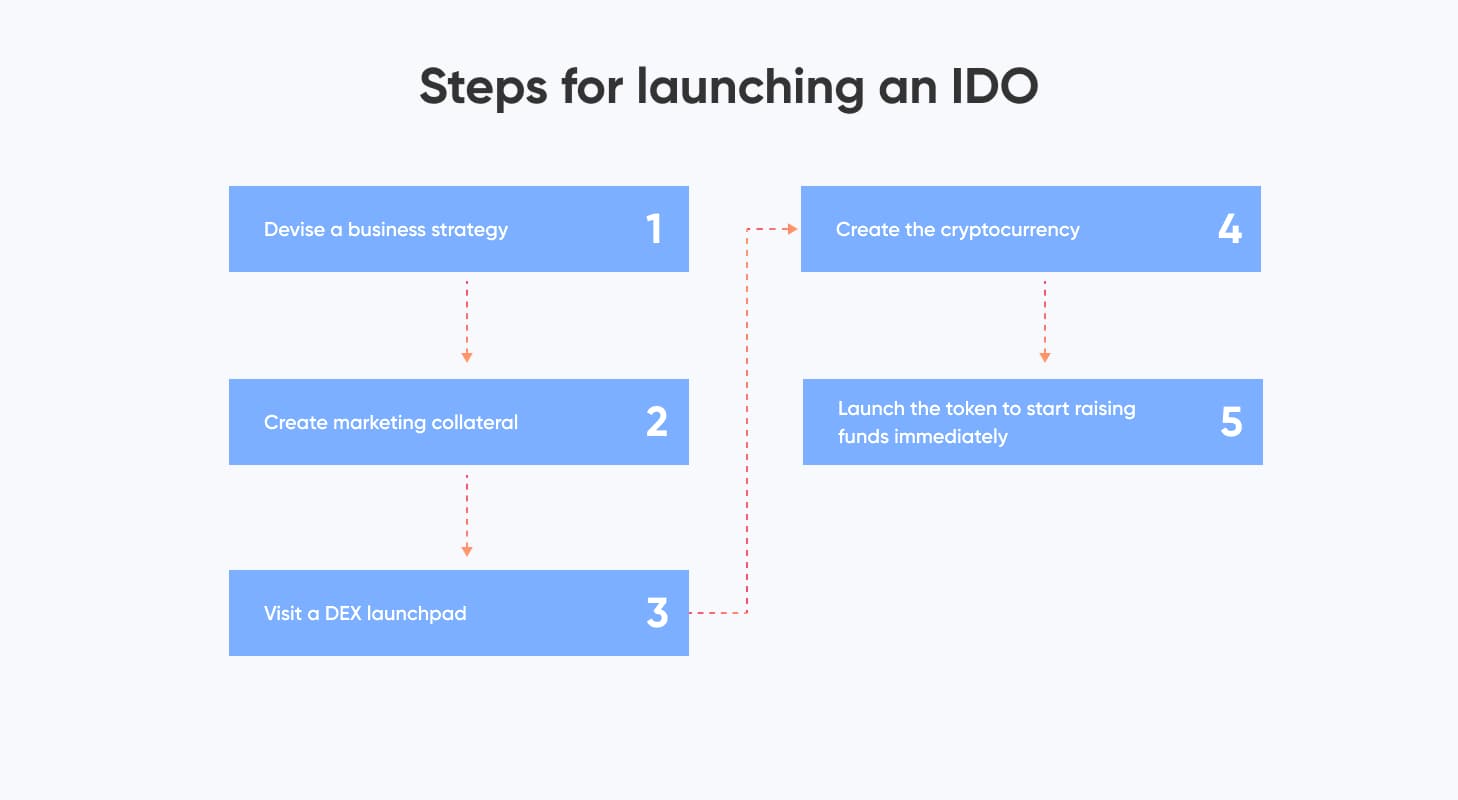
1. Define the Business Case and Tokenomics
Before approaching a launchpad, be able to explain in one page what the token does, who needs it, and how funds raised will be spent. Tokenomics (total supply, allocation between team, treasury, liquidity and public sale, and any vesting schedule) is the first thing both launchpads and investors check. Our tokenomics design guide covers the supply, allocation and vesting decisions in detail, and reasonable token vesting terms are one of the fastest ways to signal a serious project to a launchpad's review team.
2. Prepare the Whitepaper and Marketing
A whitepaper that clearly states the problem, the token's utility, the team, and the fund-use breakdown is a prerequisite for almost every launchpad application. Pair it with a working landing page: launchpads reject applications with no product signal beyond a deck.
3. Choose a Launchpad
Compare launchpads on vetting rigor, allocation method (lottery vs. tiered staking), audience overlap with your target users, and fee structure. Binance Launchpad and multi-chain platforms like TrustSwap remain active as of September 2026. Polkastarter, once a leading IDO venue, has shifted its main product to a collectibles marketplace and now runs its original launchpad as a legacy offering with little new listing activity. Confirm a platform is still actively launching projects before applying, rather than relying on a 2021-era comparison.
4. Build, Audit and Deploy the Token
Work with a team that has shipped smart contracts before, not just a template generator. Before any public sale, get an independent smart contract audit, because unaudited token and sale contracts are still one of the most common sources of exploits in Web3, and most reputable launchpads now require an audit report before they will list a project.
5. Launch and Seed Liquidity
At TGE, the launchpad collects committed funds, mints or unlocks the token, and pairs part of the raised capital with the token in a liquidity pool on the DEX. Plan the liquidity pool size and any lock-up before launch day: thin liquidity is what causes the price swings that give IDOs a bad reputation.
Why Projects Still Choose the IDO Model
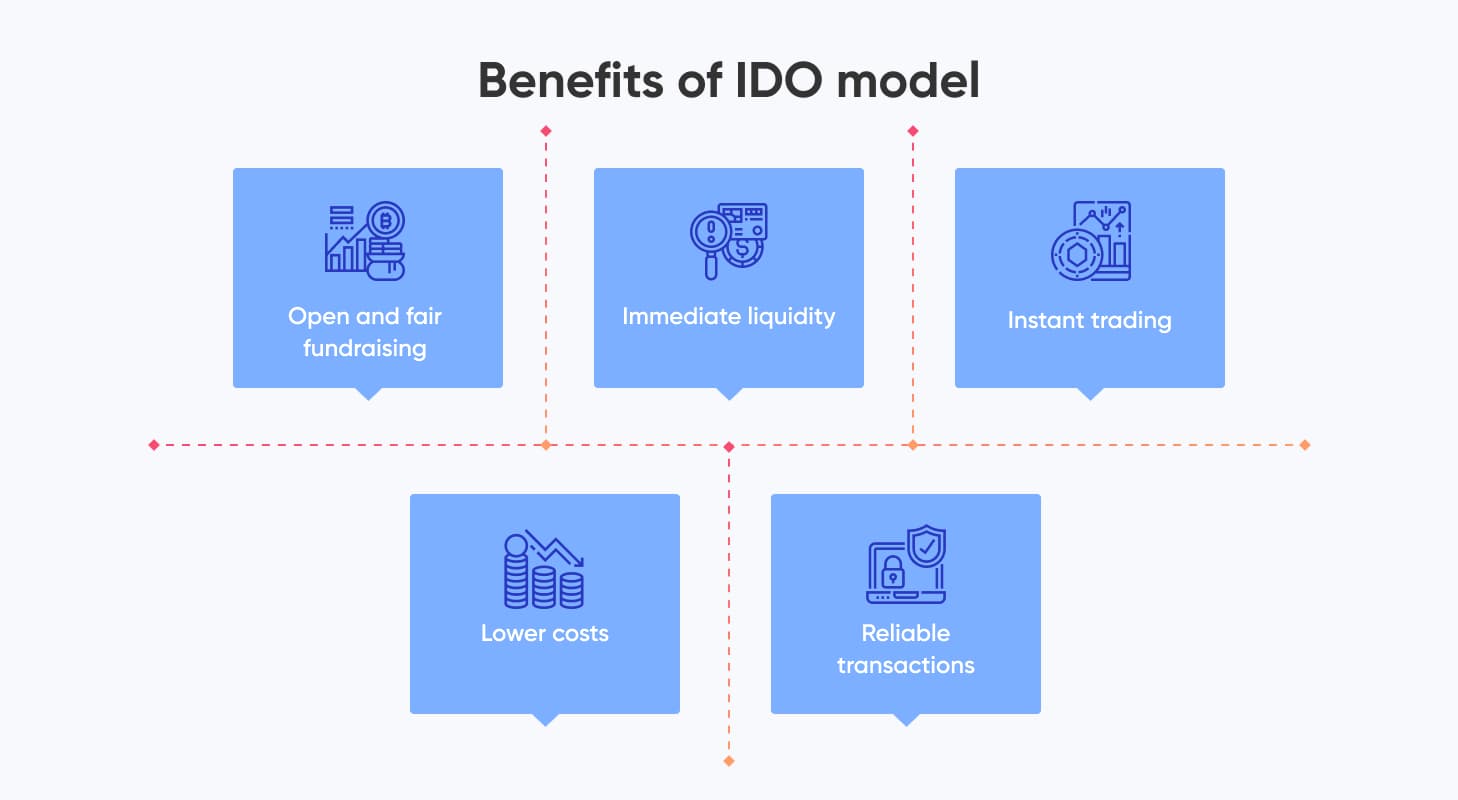
Compared with an ICO, an IDO gives a project three practical advantages: the launchpad's existing audience reduces marketing spend, the DEX's liquidity pool means the token is tradable within minutes of the sale closing rather than weeks later, and gas fees are typically the only cost, with no exchange listing fee, unlike an IEO. The trade-off is that IDO investors get fewer guarantees than IEO investors, since most DEXs still run no KYC checks, so due diligence sits with the investor rather than a centralized gatekeeper.
Regulatory Groundwork Before You Launch
A token sale open to EU residents now falls under the EU's Markets in Crypto-Assets Regulation (MiCA). MiCA's rules for offers of crypto-assets to the public, including the requirement to publish a compliant white paper, have applied in full since 30 December 2024, and the transitional period for crypto-asset service providers to obtain full authorisation ended 1 July 2026, so any EU-facing launchpad or service provider you use should already hold that authorisation rather than be operating under a grandfathering clause.
In the US, whether a token counts as a security is still assessed case by case under the Howey test; a token sold primarily as an investment with an expectation of profit from the issuer's efforts carries meaningfully higher securities-law risk than one sold for near-term utility. None of this is legal advice, so get jurisdiction-specific counsel before setting sale terms, especially if US or EU residents can participate.
Common Mistakes That Sink an IDO
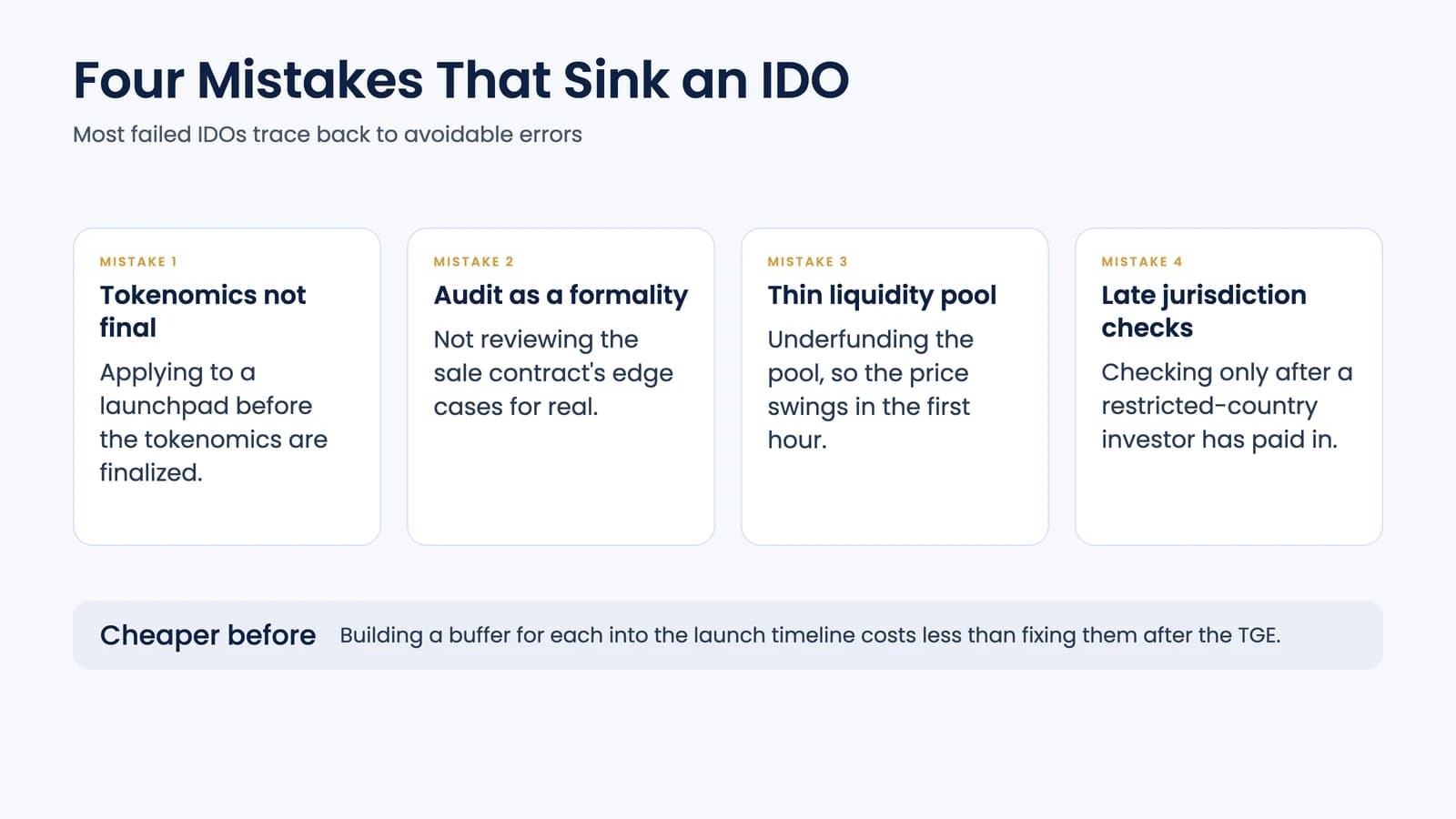
Most failed IDOs trace back to a handful of avoidable mistakes: applying to a launchpad before the tokenomics are finalized, treating the audit as a formality rather than a real review of the sale contract's edge cases, underfunding the launch liquidity pool so the price swings violently in the first hour of trading, and skipping jurisdiction checks until an investor from a restricted country has already paid in. Building a buffer for each of these into the launch timeline is cheaper than fixing them after the TGE.
How 4IRE Can Help
4IRE builds and audits the technical side of a token launch: token and sale smart contracts, decentralized exchange or launchpad integrations, and pre-launch security review. If you're weighing an IDO against other paths, our guide to raising funds in crypto covers how IDOs compare with grants and venture rounds.
Conclusion
An IDO can still get a token to market faster and cheaper than an ICO, provided the tokenomics are sound, the contracts are audited, and the sale terms respect the rules of every jurisdiction your investors are in. Treat the launchpad choice and the audit as the two steps you don't skip.
Ready to Take a Token to an IDO?
Talk to our team about tokenomics, smart contract development and pre-launch audits before you approach a launchpad.
FAQ
An ICO is run by the project itself on its own website, with no independent screening. An IDO is hosted by a decentralized exchange or launchpad, which vets the project and lists the token on its own liquidity pool immediately after the sale, giving investors a faster route to a tradable asset and the project a ready-made audience.
Define the tokenomics and business case, get a whitepaper and audit-ready contracts prepared, apply to a launchpad whose audience matches your project, and plan the liquidity pool for the Token Generation Event. Budget time for compliance review if EU or US residents can participate.
There is no single best launchpad: terms, vetting standards and audience differ, and the field has consolidated significantly since the 2021 boom. Binance Launchpad and TrustSwap are examples of platforms actively running launches in 2026; Polkastarter, an early leader, now runs its launchpad as a legacy product after pivoting its main business to a collectibles marketplace. Check each one's current requirements and track record before applying.
It depends on where your investors are. In the EU, MiCA's white paper and public-offer rules already apply, and its transitional authorisation period for crypto-asset service providers ended 1 July 2026. In the US, whether a token is a security is assessed case by case. Get legal advice specific to your target markets before setting sale terms.