

 NFT

NFT trading didn't disappear after the 2021-2022 hype cycle. It settled into a smaller, steadier market built on gaming assets, ticketing, collectibles, and tokenised real-world items. For founders who don't want to build from scratch, a pre-built or white-label NFT marketplace solution is still the fastest way to get a platform live. This roundup covers the build-vs-buy trade-offs and the vendors worth evaluating, based on 4IRE's own marketplace development work and a direct check of each listed vendor's current site.
White-Label vs. SaaS vs. Custom Development
Three paths lead to a live NFT marketplace, and the right one depends on how much control you need versus how fast you need to launch.
- White-label. A ready-made product you configure and brand. Fast time to market, a one-time licence fee rather than ongoing subscription costs, and you typically get code and API rights transferred to your company.
- SaaS. Similar speed to white-label, but you pay an ongoing subscription and the platform runs on the provider's infrastructure rather than yours: quick to start, harder to fully own.
- Custom development. Full control over architecture, chains, and features, at the highest cost and longest timeline. The right call once you know exactly what differentiates your marketplace and have the budget to build it.
NFT Marketplace: Key Features
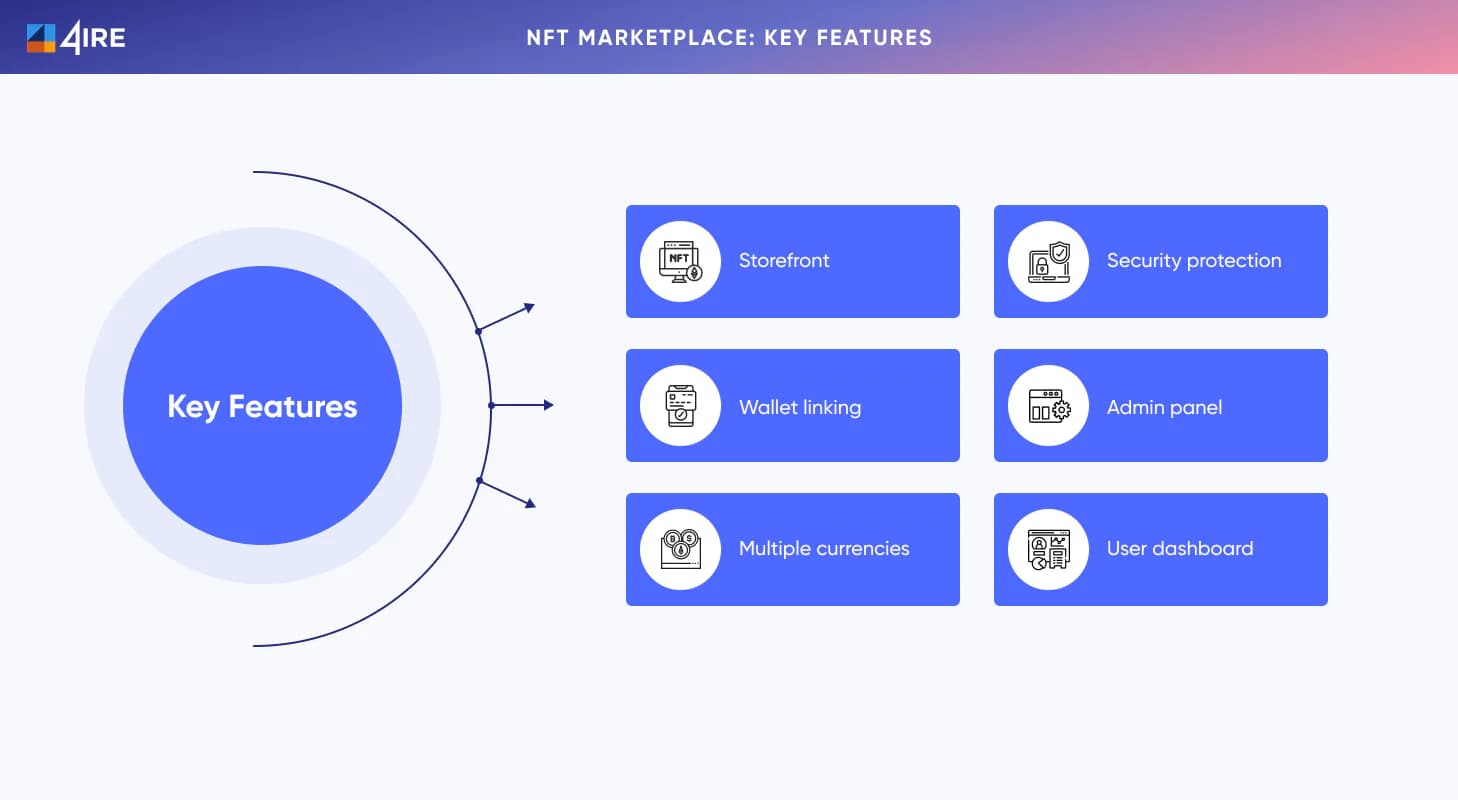
Whatever path you choose, check the vendor covers: an auction engine (fixed-price and bidding), a storefront that displays collections clearly, flexible wallet linking, a user dashboard, multi-currency support, and security features like 2FA and KYC where regulated payment rails are involved. A platform missing any of these tends to need custom development work later to fill the gap, which erodes the speed advantage you bought the white-label solution for in the first place.
Top NFT Marketplace Solutions in 2026
We checked each vendor below against its own current site (fetched September 2026) rather than repeating older listicle entries: several vendors commonly cited in older NFT roundups (NFTify, NFTically, Aetsoft) no longer show evidence of active operation, so we dropped them rather than recommend a platform we couldn't verify.
1. 4IRE
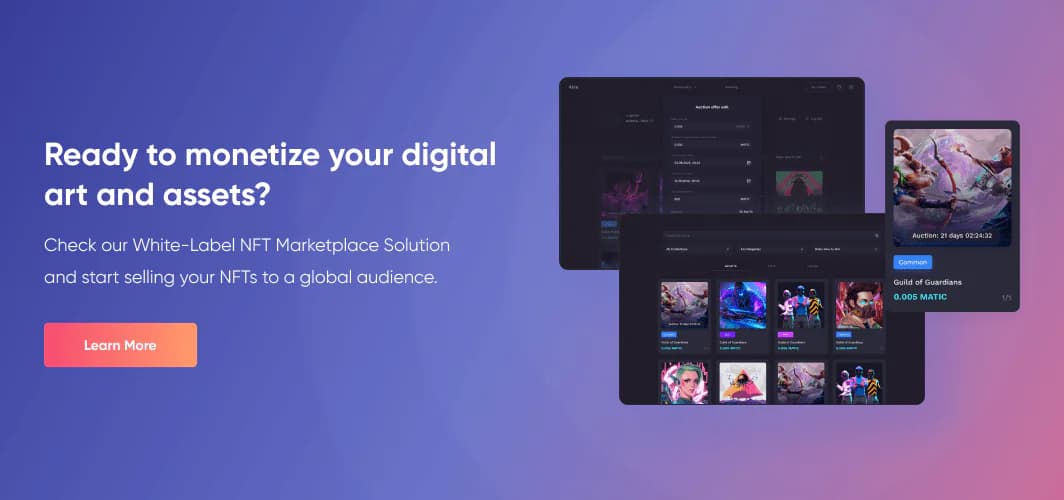
4IRE's white-label NFT marketplace gives you a configurable core: auctions, royalty management, multi-currency support, lazy minting, 2FA, and full EVM compatibility, with code and API rights transferred to your company. It's built for founders who want a fast, owned launch rather than an ongoing SaaS subscription; the NFT marketplace development team can also extend it into a custom build as your platform grows.
2. Blockchain App Factory
A broad Web3 development shop offering custom NFT marketplace builds alongside RWA and real-estate tokenization platforms; its portfolio includes music/art marketplace and digital-catalogue projects. Best suited to teams that want one vendor across NFT, tokenization, and marketing services rather than a narrow NFT specialist.
3. Accubits
A blockchain and AI development firm offering an outcome-based engagement model alongside traditional project scoping. Its NFT and broader blockchain work sits within a wider AI/consulting practice, which can be an advantage if your roadmap includes AI features alongside the marketplace itself.
4. Unicsoft
A Web3 development company with Hedera and Solana partner status, with delivered projects including a sports NFT marketplace built for fan engagement. A reasonable fit if your marketplace targets a specific vertical (sports, gaming, or fan communities) rather than a general-purpose catalogue.
5. Solulab
Combines Web3, AI, and general software development, with NFT marketplace and white-label NFT marketplace offerings alongside case studies including an NFT-powered Solana wallet. Worth considering if you want a vendor that can extend the marketplace into adjacent AI-driven features later.
6. Inoru
An end-to-end Web3 development company with offices across the US, UK, UAE, India and Singapore, offering NFT marketplace development plus dedicated NFT marketing services (listings, community and social strategy). A fit for teams that want launch marketing bundled with the build itself.
7. Rock'n'Block
A blockchain development shop with NFT marketplace, generative NFT, and NFT software development services alongside its core DeFi and RWA tokenization work. Its broader DeFi expertise (AMMs, lending, data indexing) is a plus if your NFT marketplace needs to plug into a wider DeFi product down the line.
Choosing the Right Vendor
Match the vendor to what your project actually needs beyond the marketplace core: a narrow NFT specialist gets you a faster, more focused build; a broader Web3 shop is worth the trade-off if you expect to add tokenization, DeFi, or AI features later. Ask every vendor the same three questions (do we own the source code and API rights, what's included versus billed as a change request, and who runs the smart contract audit) before comparing quotes, since those three answers explain most of the price difference between vendors quoting the same feature list. If you're minting under ERC-721 and building the marketplace from the ground up rather than buying a solution, our NFT marketplace development guide covers the full technical process, and if the platform serves a specific game, see our P2E NFT marketplace guide instead.
Trends to Watch
- Multi-chain by default. Few marketplaces launch single-chain today; buyers expect NFTs to move across Ethereum, Solana, and major L2s without a manual bridge.
- New token standards. Beyond ERC-721/1155, standards like ERC-6551 (token-bound accounts, letting an NFT own other assets) are moving from experimental to supported in mainstream tooling.
- Compliance by design. Identity checks above certain transaction thresholds are becoming standard for marketplaces that accept fiat on-ramps, driven by payment-partner and regulatory requirements rather than platform choice.
Conclusion
A pre-built NFT marketplace solution is still the fastest, lowest-risk way to launch (you get proven features and skip months of custom development), but only if the vendor is actually active and the feature set matches what your audience needs. Verify what you're buying, check for source-code and API ownership, and budget for a smart contract audit regardless of which path you choose; see our guide on how to build an NFT marketplace like OpenSea for the full build process if you decide custom development is the better fit.
Build Your NFT Marketplace with 4IRE
Compare vendors, then talk to a team that can scope a white-label launch or a fully custom build. Get a quote for your NFT marketplace project.
FAQ
As of September 2026, nftify.io shows only a 'coming soon / under construction' placeholder with no product details, so we removed it from this list rather than recommend a platform we couldn't verify is operating.
White-label is cheaper and faster — a one-time licence fee and a launch in weeks rather than months — but limited to the vendor's existing feature set. Custom development costs more and takes longer, in exchange for full control over architecture and features.
Yes. 4IRE's white-label NFT marketplace includes auctions, royalty management, lazy minting, multi-currency support and 2FA, with code and API rights transferred to your company; see white-label NFT marketplace for details.
Confirm the vendor is still actively operating, ask whether source code and API rights transfer to you, get clarity on what counts as a billable change request versus what's included, and confirm who runs the smart contract audit before launch.