

 Data science

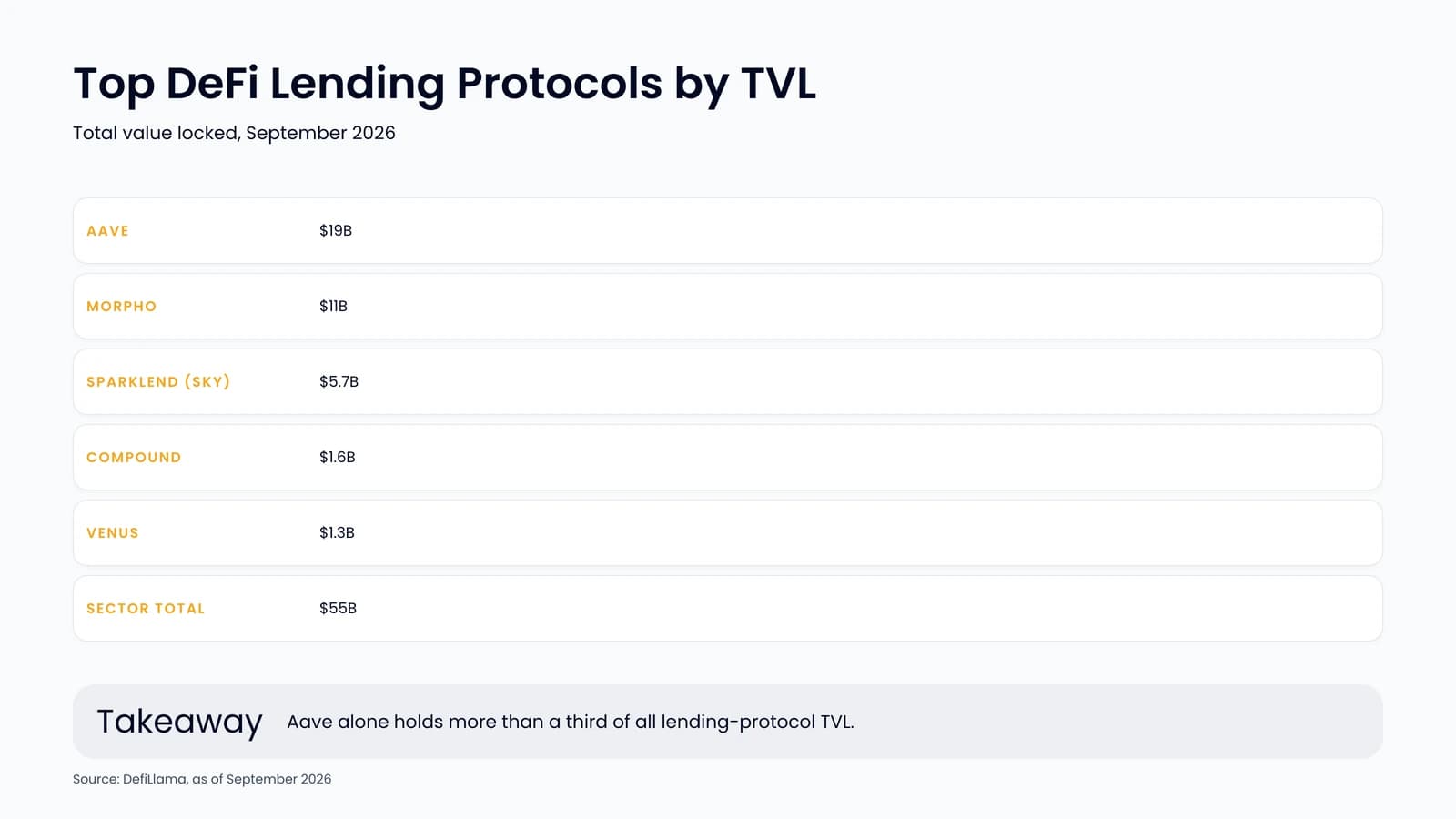
Crypto lending exists because a large share of the world is still unbanked or underbanked, and because crypto holders want a way to earn on assets they'd otherwise leave idle. Lenders deposit crypto into a pool and earn interest; borrowers post collateral and draw a loan without a credit check. Blockchain-based DeFi lending has grown accordingly: lending protocols held about $55 billion in total value locked as of late September 2026, according to DefiLlama.
In this article, 4IRE's DeFi development team breaks down how crypto lending works, the risks worth knowing, and the platforms that actually lead the market today, not the ones that led it when this article was first written.
What Is Crypto Lending?
DeFi lending runs on the same blockchain principles as the rest of decentralized finance: transactions are validated by network participants rather than a bank, and the terms live in a smart contract instead of a loan agreement, with no credit check involved. But it isn't a direct copy of fiat lending. Lenders deposit crypto into a shared liquidity pool and earn a fee for its use; borrowers don't withdraw that pooled crypto directly. Instead, they lock their own crypto as collateral and draw a loan (often in a stablecoin) against it, because they'd rather not sell an asset they expect to appreciate.
How Crypto Lending Works
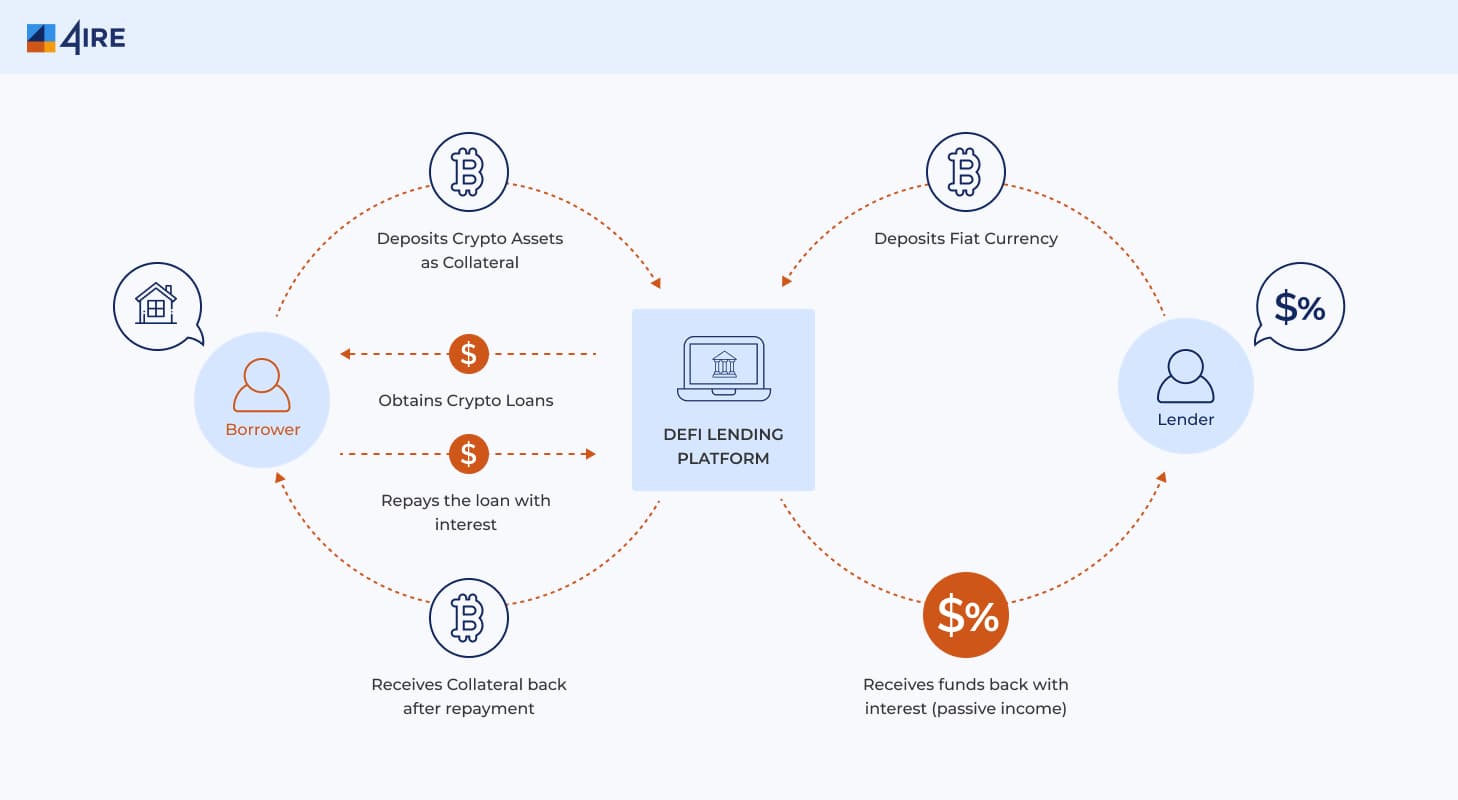
Lenders provide liquidity so borrowers and traders can access it without moving prices sharply, and are paid a fixed or variable rate for that liquidity. Borrowers, meanwhile, are really borrowing against their own assets: they lock crypto as collateral and receive a loan (typically in a stablecoin) without selling the collateral itself, keeping their upside if its price rises. This differs from how a decentralized exchange works: a DEX matches two parties trading assets against each other, while a lending protocol pools deposits and lends them out against collateral.
Risks Involved in Crypto Lending
Crypto lending is more accessible than a bank loan, but it isn't risk-free. Before taking or issuing a crypto loan, weigh:
- Smart contract and technical risk in the platform's own code and price oracles.
- Liquidity risk: a platform that has issued more loans than its reserves can cover may struggle to return collateral or deposits on demand.
- Liquidation risk: platforms automatically close undercollateralized positions when an asset's price drops, sometimes with a penalty on top.
- Regulatory risk: rules for crypto lending and stablecoin-denominated loans are still developing in most jurisdictions, and can change the terms a platform is able to offer with little notice.
How to Evaluate a DeFi Lending Platform
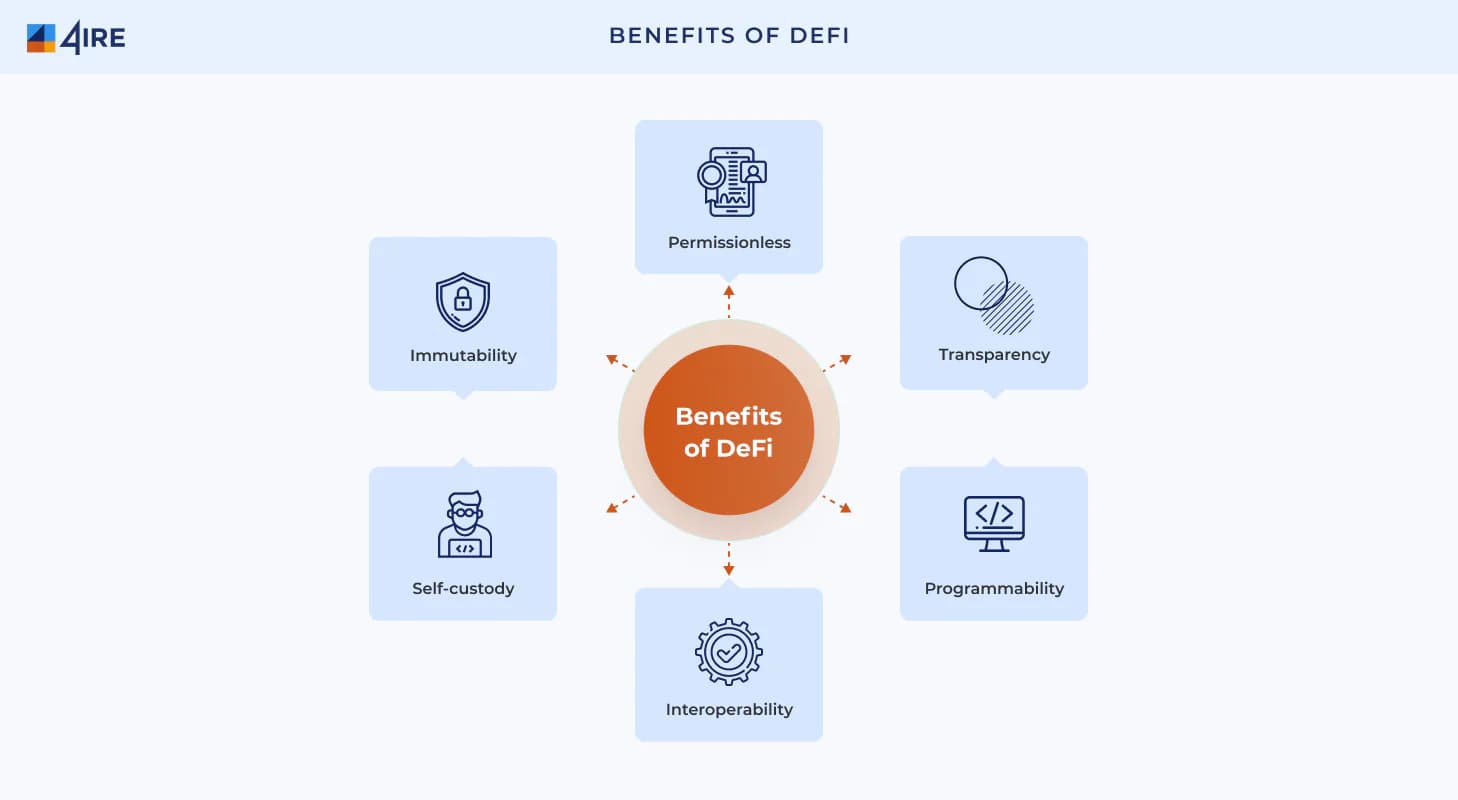
With dozens of platforms competing for deposits, a few criteria separate the durable ones from the rest:
- Total value locked (TVL). A higher TVL generally means deeper liquidity and easier entry and exit without moving the market.
- Open-source, audited code. Anyone should be able to review the contracts governing your funds, and an independent smart contract audit should have actually happened.
- Track record. Time in production without a material exploit is worth more than a roadmap.
- Simple onboarding. No lengthy forms: connecting a wallet should be enough to start.
- Autonomous, transparent terms. Loan terms should live in the smart contract itself, not be adjustable by the platform's operators after the fact.
Top 5 DeFi Lending Platforms in 2026
This list is limited to actual DeFi protocols: smart contracts that hold the funds directly and let anyone inspect them on-chain. It excludes centralized crypto lenders like Celsius and BlockFi, which took custody of user funds the same way a bank does and both filed for bankruptcy in 2022; that collapse is a large part of why the market has shifted toward the non-custodial, on-chain model these five platforms represent. Ranked by total value locked, per DefiLlama, as of late September 2026:
Aave
Aave is the largest lending protocol, with about $19 billion in total value locked. It's a non-custodial money market: lenders deposit into shared pools and receive interest-bearing aTokens, while borrowers post collateral to draw a loan at a rate that floats with each asset's utilization. It also offers flash loans: uncollateralized loans that must be borrowed and repaid within a single transaction.
Morpho
Morpho, with about $11 billion in total value locked, takes a different approach: rather than pooling all deposits together, it matches lenders and borrowers more directly, layering on top of or alongside pools like Aave's and Compound's to improve the rate both sides get.
SparkLend (Sky)
SparkLend, the lending market run by Sky (the protocol formerly known as MakerDAO), holds about $5.7 billion in total value locked. It's closely tied to Sky's USDS stablecoin (the successor to DAI) and its broader vault-based lending infrastructure, one of the oldest continuously operating models in DeFi.
Compound
Compound, at about $1.6 billion in total value locked, was one of the protocols that popularized pooled-liquidity lending on Ethereum. It remains an open, permissionless money market across several major assets, governed by holders of its COMP token.
Venus
Venus, with roughly $1.3 billion in total value locked, brings the same pooled lending and borrowing model to BNB Chain, giving users a lower-fee alternative to the largely Ethereum-based leaders above.
Which Is the Best DeFi Lending Platform?
By total value locked, Aave is the clear leader today, and its combination of scale, multi-chain support and a long audit history makes it a reasonable default for most users. But best depends on what you need: Sky/SparkLend for the deepest ties to a major stablecoin, Morpho if you want rate efficiency layered on top of an established pool, or Compound and Venus for a simpler, single-purpose money market on Ethereum or BNB Chain respectively. For the underlying mechanics in more depth, see our guide on how DeFi lending works.
Building on DeFi Lending Infrastructure
Most businesses don't need to launch a new lending protocol: integrating an existing one, with a compliant front end and the right custody and reporting layer, covers most use cases. Building a dedicated platform makes sense mainly for institutions and ecosystems that need custom collateral types, permissioned pools, or terms none of the top five protocols offer. Either path benefits from a team that has actually shipped blockchain development work in DeFi, not just read the whitepapers.
Learn more from us
 29 Sept 2026
How Does DeFi Lending Work?
How DeFi lending works: over-collateralization, benefits, risks, leading protocols like Aave and Morpho, and what it costs to build a platform.
Andrew Klesov
 Fintech news28 Sept 2026
How to Build a DeFi Lending and Borrowing Platform
How DeFi lending works, how Aave, Compound and Morpho differ, and how to build a lending and borrowing platform: risk design, contracts and security.
Olena Petrashchuk
 29 Sept 2026
What Is a Decentralized Exchange (DEX) and How Does It Work?
What is a decentralized exchange? How DEXs work, order books vs AMMs, pros and cons, and the top DEX platforms to know in 2026.
Vladislav Malynovskyi
Build on DeFi Lending Infrastructure
Evaluating whether to integrate an existing lending protocol or build your own? Our team can help you weigh the trade-offs.
FAQ
It's a smart contract-based protocol that lets users become lenders and borrowers without a bank: lenders deposit crypto to earn interest, and borrowers post crypto collateral to draw a loan.
Lenders deposit crypto into a shared pool and earn a fee for its use. Borrowers lock their own crypto as collateral and receive a loan (usually in a stablecoin) without selling the underlying asset, and repay it plus interest to reclaim their collateral.
Look for meaningful total value locked, publicly auditable and independently audited smart contracts, a multi-year track record without a major exploit, straightforward wallet-based onboarding, and loan terms that are enforced by the contract itself rather than adjustable by the platform's team.
Yes. Several major protocols now offer permissioned pools aimed specifically at institutional lenders and borrowers, layering compliance checks on top of the same underlying smart contract infrastructure retail users access.